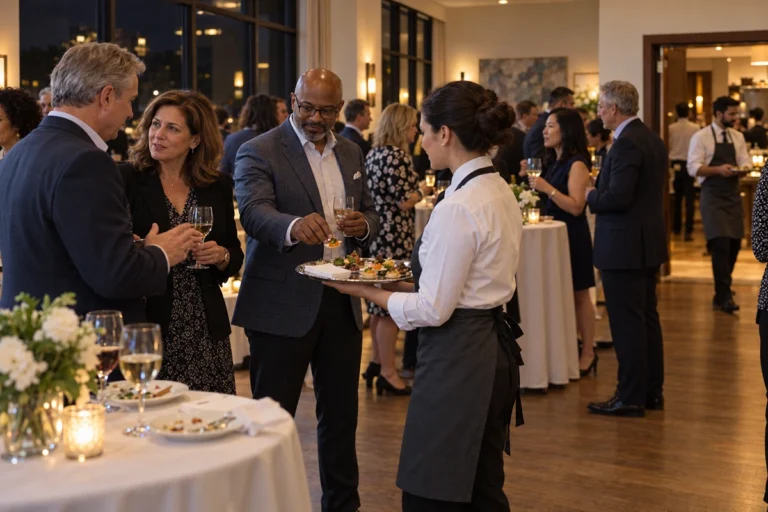
- Is Your Event Ready for a Mini-Disaster?

How to Handle Mini-Disasters in Corporate Event Planning
In corporate event planning, no matter how meticulous the preparation, unexpected disruptions are part of the landscape. From a power outage moments before a keynote to catering delays that frustrate guests, even small setbacks can have a disproportionate impact on brand reputation and attendee satisfaction.
Many of these risks are shaped by early choices and can be avoided, such as choosing the right venue for corporate events, which often determines how much flexibility you will have when things go off-script. The goal of this article is to highlight the mini-disasters most likely to occur during professional events and provide practical strategies that event managers can apply immediately. Instead of surface-level advice, we will focus on tested solutions, grounded in real experiences. By understanding these risks in advance and planning accordingly, organizers can transform unpredictable challenges into manageable moments that demonstrate professionalism and reliability.
Avoiding Power and AV Failures in Corporate Event Planning

Technical issues like sudden power cuts or malfunctioning microphones can derail even the best-planned events. These disruptions not only interrupt the program but can also damage audience confidence.
To prepare, build redundancies into your corporate event planning: confirm the venue’s backup power options, run full AV checks before the event, and keep essential spares on hand. Staff should also be prepared to guide guests calmly in the event of delays and assist speakers while technical issues are being addressed.
Quick Checklist
Confirm backup power is available.
Test AV equipment ahead of time
Keep spares (mics, cables, batteries)
Assign a clear technical contact.
Train staff to manage guest flow
Handled proactively, a power or AV failure becomes a brief setback, not a showstopper.
Subscribe To Our NewsLetter
We help you to elevate your events with our highly skilled professionals. You got these three simple steps to book our service
When Catering Fails in Corporate Event Planning
Power or AV failures are only the tip of the disruptions that can derail an event. What often has a bigger and more immediate impact on guests is catering. When food or drinks are delayed, run out too quickly, or arrive in poor condition, frustration spreads fast. Unlike a short tech delay, catering problems affect every attendee at once and can quickly overshadow the rest of the program.
Solution
Build contingency into your corporate event planning. Work with reliable vendors, place orders with a safety buffer, and confirm delivery timelines well in advance. Have a secondary caterer or simplified backup menu ready in case of unexpected shortages. Just as important, train service staff to redirect guests smoothly, keep lines organized, and manage expectations so frustration doesn’t escalate. Handled with foresight, a catering hiccup becomes a recoverable moment instead of a reputation-damaging disaster.

Rain or Shine? Weather Disruptions in Corporate Event Planning
Even the most carefully scheduled events can be thrown off by the weather. Outdoor gatherings face the risk of sudden rain, high winds, or temperature swings, while indoor venues can also be affected if extreme conditions delay travel or deliveries. Unlike technical or catering issues, weather is entirely beyond anyone’s control, but its impact can be managed with foresight.
In corporate event planning, weather readiness means building clear backup options into the program. This includes securing an indoor contingency venue, arranging tenting or shade, and monitoring forecasts in real time using resources like the National Weather Service , so adjustments can be made before conditions worsen.
Weather Risk → Backup Plan
| Risk | Practical Backup Plan |
| Sudden rain | Reserve indoor space / install tenting |
| Excessive heat | Shade structures, water stations, cool zones |
| Strong winds | Avoid tall displays, secure outdoor signage |
| Cold snaps | Portable heaters, blankets, and an adjusted dress code |
With realistic alternatives in place, weather disruptions shift from panic-inducing to manageable, protecting both guest comfort and event flow.
How to Manage Medical Emergencies in Corporate Events?
Extreme weather does not just disrupt logistics; it can also trigger health issues such as fainting, heat exhaustion, or slips in wet conditions. Beyond weather, corporate events see common emergencies like allergic reactions or minor injuries. These situations can escalate quickly if staff and organizers are not prepared.
In corporate event planning, medical readiness should never be left as an afterthought. Having on-site first aid kits, clear emergency contacts, and, when possible, a professional medic on location can make all the difference. Event teams can also ensure basic readiness through resources such as the Red Cross First Aid & Safety Training, staff must be trained to recognize warning signs early and respond calmly until help arrives.
Quick Action Flow for Medical Situations
- Recognize signs such as fainting, breathing trouble, or visible distress.
- Alert emergency contacts or on-site medic immediately
- Direct guests away from the incident area to avoid panic
- Support responders by guiding them quickly to the patient
- Reassure attendees that the situation is under control.
Preparedness here is not optional. It is a duty of care that reflects directly on event professionalism.

How to Handle Security Issues in Corporate Event Planning
Just as medical emergencies require fast action, security lapses can escalate in seconds if not managed. Gatecrashers or unruly guests aren’t just hypothetical risks; they can happen anywhere, even at the most exclusive events.
A notable real-world example occurred at the 2009 White House state dinner for India’s Prime Minister, when uninvited guests were able to bypass two security checkpoints—including one requiring photo ID—and mingle freely with President Obama and other dignitaries. The intrusion was attributed to a staff member being persuaded by the crashers’ assured demeanor and pressure to keep lines moving. This highlights how crucial it is to balance courtesy and freedom of movement with strict verification and staff accountability.
In corporate event planning, security starts with prevention. Credentialled entry systems, defined evacuation routes, and properly briefed staff ensure that small lapses do not spiral into major incidents. For more detailed guidance, review best practices from the Event Safety Alliance
Scenarios: Right vs Wrong Security Response
| Scenario | Wrong Response | Right Response |
| Gate crash attempt | Staff distracted, allow guests through unchecked | Staff verify credentials firmly and redirect unverified guests |
| Unruly guest | Argument escalates in the crowd, and guests feel unsafe | Staff intervene early, de-escalate calmly, and move the issue away from guests |
| Overcrowding at the entry | Lines bottleneck, frustration grows, safety hazards appear | Multiple checkpoints open, staff direct flow to avoid congestion |
| Lost attendee | The guest becomes disoriented and frustrated | Staff assist immediately, guide them to the correct area, and reassure them |
Logistics Failures in Corporate Event Planning
Even when security runs smoothly, guest experience can be disrupted if people cannot get to or move around the event easily. Transportation and logistics are often overlooked in corporate event planning, yet they are among the most common sources of frustration. Delayed shuttles, traffic congestion, or poor parking directions can set a negative tone before guests even enter the venue.
Strategies to Reduce Transport Disruptions:
- Arrange multiple transport vendors to avoid relying on a single provider
- Use GPS tracking apps for real-time shuttle updates.
- Provide clear signage for parking and pedestrian routes.
- Assign staff to guide guests at key points such as entrances and loading zones.s
- Keep a backup communication channel with drivers for last-minute adjustments
Smooth logistics are invisible to most attendees, but when they fail, everyone notices. Building reliable transport systems into planning ensures the event starts and ends on a positive note.
Integrating Staffing Into Disaster Readiness
Disaster planning often focuses on vendors, venues, and contingency contracts, but one critical factor is sometimes underestimated: staffing. During any mini-disaster, it is the staff who are the first visible line of response. Whether guiding guests during a power outage, de-escalating a heated exchange, or keeping food lines orderly, trained staff prevent small problems from becoming headline-making failures.
In corporate event planning, relying on ad-hoc hires or untrained staff creates hidden vulnerabilities. To strengthen resilience, staffing strategies must be integrated into the overall disaster-readiness plan.
Myth vs. Reality in Corporate Event Planning
| Myth | Reality |
| “Staff are just for check-in and serving.” | Staff also reassure guests, manage crowd flow, and communicate updates during disruptions. |
| “Temporary hires can handle any task.” | Untrained staff often freeze under pressure, while trained teams pivot quickly and stay composed. |
| “If the plan is good, anyone can execute it.” | Plans only succeed if staff are briefed, capable, and confident under stress. |
| “Disasters are rare, so staff don’t need special prep.” | Even minor issues like catering delays or AV glitches happen often, and staff are the first to respond. |
| “Security or vendors will manage most problems.” | Vendors and security play a role, but frontline staff are the ones guests turn to first. |
| “Adding more staff automatically means better coverage.” | Quantity does not equal quality; a smaller trained team is more effective than a larger untrained one. |
Spotting the difference between overpromises and genuine staffing capability can be difficult. That’s why knowing what to consider when hiring corporate event staff is equally, if not more important.
Premier Staff’s Role
As an event manager, you are already at the front line of corporate event planning. Guests, executives, and stakeholders look to you for answers the moment something goes wrong. The weight of that responsibility can be overwhelming when you are trying to oversee logistics, vendors, and programming all at once. This is where a dedicated staffing partner changes everything.
At Premier Staff, our mission is to take that pressure off your shoulders so you can focus on guest engagement and high-level decision-making. We hire only the top 4 percent of applicants nationwide, and each team member undergoes extensive training to handle not only routine responsibilities but also unexpected challenges.
Why Premier Staff Makes a Difference
Only the top 4% of applicants are hired.
Staff are cross-trained to pivot quickly in crisis moments.
Teams are prepared for guest reassurance and communication.
Specialists trained in security support and crowd control keep environments safe and calm.
Problems are handled quietly so you stay focused on what matters.
FAQs
What is the most common mini-disaster in corporate event planning?
The most frequent disruptions are power or AV failures, catering shortages, and transportation delays. These issues happen more often than large-scale emergencies and have the biggest impact on the guest experience if not addressed quickly.
How much contingency should I build into catering for a corporate event?
A good rule of thumb is to order 5–10 percent more than your expected headcount, especially for high-demand items. Always confirm delivery windows with vendors and have a simplified backup menu in case of last-minute shortages.
Do I really need medical and security planning for smaller events?
Yes. Even smaller gatherings can face medical emergencies or security incidents. Having a first aid kit, emergency contacts, and a clear escalation process is essential. For security, simple steps like credential checks and well-briefed staff can prevent small issues from becoming major problems.
How does Premier Staff help manage disruptions during an event?
Premier Staff hires and trains team members to act as the first line of response. Whether it is crowd control during an evacuation, managing guest communication during delays, or keeping catering lines orderly, our staff are equipped to step in so disruptions do not overwhelm the event manager.
Can Premier Staff handle both guest services and security support?
Yes. While not a replacement for professional security teams, Premier Staff employees are trained to support security functions such as credential checks, access management, and basic crowd control. This includes roles like ushers, who help manage entry flow and ensure smooth guest movement.
Is Premier Staff suitable only for large-scale events, or can they support smaller corporate gatherings too?
Premier Staff adapts to the scale of the event. For large conferences and galas, we provide full staffing teams across multiple roles. For smaller gatherings, our corporate event services are tailored to provide cross-trained staff who can handle multiple responsibilities, ensuring efficiency without compromising quality.
Conclusion
Mini-disasters are an unavoidable reality in corporate event planning, but they do not have to define the outcome of your event. From power outages and catering delays to medical emergencies, security concerns, and logistics breakdowns, each challenge can be managed with foresight and the right support system. The most effective plans combine preparation, vendor coordination, and above all, trained staff who act as the first line of defense.
Are You Ready to Elevate Your Event?
Don’t wait—book Premier Staff now to secure top-tier professionals for your next event.
Recommended Posts