

Daniel M., CEO - Premier Staff
Every event we staff has a breaking point, a moment where the wrong ratio, a missed transition, or a slow response turns a minor bottleneck into a compliance issue. Our crowd management teams are trained to find that point before the crowd does. That's not security. That's operational precision.
Want to Elevate Your Brand Ambassador Staffing Agency NYC Plans?
Weddings succeed or fail based on the people managing the service on the ground. Investing in professional, trained waiting staff ensures meals are served smoothly, guest areas stay organized, and your reception flows exactly as planned.
Crowd management services operate as structured prevention systems inside live events, quietly controlling flow, reducing density risk, and protecting program continuity from the first check-in to the final session close.
At conferences and trade shows, attendee movement shifts constantly. A single session release can compress hallways within minutes. That compression can delay programming and increase compliance exposure. Behind the scenes, professional teams monitor movement patterns in real time, stabilize entry flow, and coordinate directly with event staff for conferences to keep transitions smooth.
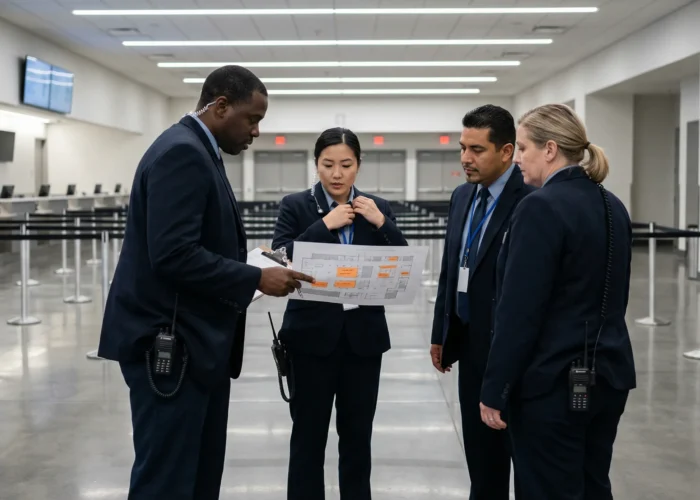
Working in crowd management at live events means operating in controlled anticipation. Teams review floor plans before doors open. They calculate staffing ratios against projected throughput. They identify pressure zones near elevators, escalators, food stations, and sponsor areas. When peak transitions begin, supervisors reposition personnel quickly to diffuse congestion before guests experience delays.
What guests experience as a seamless transition is the result of disciplined coordination. Crowd management services work in sync with conference event staff to maintain order, protect schedules, and preserve the event environment.
That is life behind the scenes at live events. Precision directs movement. Coordination protects timelines. Prevention safeguards your brand.
Executive Summary
Crowd management services are the operational backbone of every high-attendance conference, and the teams that run them don’t react to problems; they prevent them.
What Do Crowd Management Staff Actually Do at Live Events?
At large conferences and trade shows, crowd management services function as a structured operational layer that protects flow, safety, and schedule continuity. Their role goes far beyond directing attendees. Professional crowd management services are responsible for managing density, safeguarding access control, and stabilizing high-traffic transitions before issues escalate.
Pre-Event Planning and Flow Modeling
Effective crowd management services begin working long before attendees arrive. During pre-event planning, teams review:
- Detailed floor plans and egress pathways
- Fire code capacity limits and zone density thresholds
- Credential tiers and restricted access areas
- Projected hourly throughput at registration
- Known compression points such as escalators, elevators, and food service zones
For example, if registration is expected to process 1,000 guests per hour, crowd management services must ensure staffing coverage can absorb that volume without blocking emergency exits or creating hallway congestion.
Supervisors coordinate closely with event staff for conferences so that check-in speed, badge scanning lanes, and directional signage support safe and consistent entry flow from the first arrival wave.
Real-Time Density Monitoring
Once the event is live, crowd management services shift into active monitoring mode. Teams continuously assess:
- Entry and exit velocity
- Corridor compression patterns
- Escalator and stairwell buildup
- Queue overflow near catering or sponsor activations
Density rarely spikes without warning. It builds gradually. Experienced crowd management services identify early signals such as slowed walking speed or lateral clustering and reposition staff before congestion becomes visible to attendees.
This proactive response model is what separates structured crowd management services from reactive staffing.
Access Control and Zone Protection
Many conferences operate with tiered credentials, VIP areas, and restricted breakout rooms. Crowd management services support these environments by:
- Securing VIP lounges and speaker green rooms
- Verifying access credentials in partnership with check-in teams
- Maintaining clear egress pathways during peak movement
When access control slows down, pressure builds downstream. Coordinated communication between crowd management services and event staff for conferences prevents small credential delays from turning into density risks.
Transition Stabilization During Peak Releases
The highest-risk period at most conferences occurs within 10 to 20 minutes of major session releases. When thousands of attendees move at once, traffic patterns collide.
Crowd management services anticipate these windows by pre-positioning floor guides and supervisors at known compression zones. If hallway density increases unexpectedly, staff are redeployed within minutes to rebalance flow.
The objective of professional crowd management services is operational continuity:
- No stalled corridors
- No delayed programming
- No last-minute labor extensions
Behind every seamless transition is a supervision structure actively monitoring density and making adjustments in real time. That is the daily reality of working in crowd management services at live events.
Where Does Crowd Flow Break at Conferences and Why?
Crowd flow breaks during compressed sessions release when density spikes exceed safe thresholds, and supervision cannot rebalance movement fast enough. Most incidents occur within 10 to 20 minutes of major keynote releases, especially when food lines and elevators compete for the same space.
Crowd management services often intervene before visible problems appear. Flow usually breaks during compressed transitions. A keynote releases 1,500 attendees at once while breakout rooms are still loading. Elevators stall. Food stations create lateral congestion. Within minutes, density increases beyond safe thresholds.
In 2026, post-pandemic guest behavior adds unpredictability. According to Eventbrite’s 2026 Social Study, 79% of young adults plan to attend the same number or more live events this year, meaning simultaneous arrivals and compressed exits are becoming the norm rather than the exception. Attendees cluster around sponsor activations and networking hubs longer than agenda planners expect. Crowd management services monitor these patterns in real time and coordinate with event staff for conferences to stagger releases or redirect movement. Without that intervention, delays compound, compliance risks rise, and labor costs increase due to extended staffing coverage.
What Staffing Ratios Do Crowd Management Services Use?
Crowd flow at conferences typically breaks during compressed session transitions when large attendee volumes move at the same time. Crowd management services are designed to stabilize these moments before congestion impacts programming or compliance.
The highest-risk window usually occurs within 10 to 20 minutes of a keynote release. Thousands of attendees exit simultaneously while breakout rooms, elevators, restrooms, and food stations compete for the same space. Without structured supervision, hallway density can exceed safe thresholds within minutes.
Crowd flow breaks for three primary reasons:
- Simultaneous session releases
- Competing destination points, such as catering and escalators
- Insufficient staffing coverage in high-flow zones
Professional crowd management services monitor walking speed, queue buildup, and directional resistance in real time. When early signs of compression appear, supervisors reposition staff immediately to rebalance movement.
Attendance size plays a critical role in preventing these breakdowns. Using attendance-based staffing benchmarks, planners can determine appropriate marshal-to-attendee ratios for peak transition periods rather than relying on estimates. Aligning crowd management services with realistic attendance projections reduces compliance risk and protects schedule continuity.
Without proactive intervention, minor congestion quickly turns into delayed sessions, blocked VIP access, and extended labor costs. Structured crowd management services prevent those cascading failures before they surface.
What Staffing Ratios Do Crowd Management Services Use?
Staffing ratios determine whether crowd management services can control density effectively during peak transitions. Without defined benchmarks, teams cannot monitor both flow and access control at the same time.
Standard Conference Benchmarks
Most professional crowd management services use:
- 1 marshal per 250 to 300 attendees in high-flow zones
- 1 marshal per 200 attendees during compressed keynote releases
- 1 supervisor per 6 to 8 staff members for active oversight
These attendance-based staffing benchmarks are built around projected peak movement, not total registration numbers.
Why Ratios Matter
When coverage falls below recommended levels:
- Compression points go unmonitored
- Response times increase
- Access control slows down
- Compliance risk rises
Structured crowd management services rely on layered supervision so event staff for conferences can focus on guest experience while density control remains protected.
Well-calculated ratios keep transitions stable, prevent bottlenecks, and protect schedule continuity from entry to final session close.
Example Ratio Framework by Event Type
Event Type | Attendance | Recommended Ratio | Supervision Layer |
Corporate Conference | 2,000 | 1:300 | 1 Lead per 8 staff |
Trade Show | 5,000 | 1:250 in peak zones | Zone Supervisors |
Multi-Day Expo | 10,000+ | 1:200 during transitions | Ops Captain + Floor Leads |
These ratios may tighten depending on venue layout, vertical transport limitations, or credential complexity.
Well-structured crowd management services do not guess coverage. They calculate it based on attendance projections, transition timing, and venue constraints to protect schedule integrity from doors open to final session close.
How Have Crowd Management Services Evolved in 2026?
In 2026, crowd management services combine trained staff, digital credential checks, and AI-assisted flow monitoring to prevent density risks in real time. Venues now expect documented supervision structures and verified access control protocols for larger conferences.
Crowd management services depend on staff who can communicate clearly under pressure and make fast, consistent decisions. Training typically covers radio protocol, access control, de-escalation, and emergency response sequencing. Teams also practice handoffs with venue security so escalation paths are clear. The DHS Crowd Analysis Technologies Market Survey Report (2024) shows that AI-based software, like real-time heatmaps, density monitoring, and hazard alerts, is becoming a normal part of managing big events.
In 2026, tools matter more. Digital credential verification, zone-based access rules, and AI-assisted flow monitoring are now common at larger conferences. Crowd management services use these signals to rebalance entrances, redirect traffic, and prevent density spikes. Coordination with event staff for conferences is constant, especially when schedule shifts change attendee movement patterns.
What Is It Like Working in Crowd Management at a Large Conference?
Working in crowd management services means anticipating flow shifts, repositioning staff within minutes, and constantly coordinating with event staff for conferences. The role is proactive, not reactive, with supervisors tracking density and transition timing throughout the day.
Crowd management services operate in defined phases across the event day. The morning begins with a briefing that reviews projected attendance waves, credential tiers, and known pressure points. When doors open, teams monitor entry speed and adjust lane distribution within minutes if scanning slows.
Midday transitions require tighter coordination. As sessions release, crowd management services reposition staff to prevent hallway compression and manage food line overflow. Supervisors stay in contact with event staff for conferences to anticipate delays or room changes. By tracking density by zone and response time, teams protect schedule integrity through the final session close. Much of what makes this work is the crowd management training
staff bring into live environments and the ability to read pressure before it surfaces and act before the situation feels urgent.
What Metrics Do Crowd Management Services Track?
Professional crowd management services rely on measurable indicators to prevent disruption. Decisions are driven by data, not instinct.
Core Performance Metrics
Most crowd management services track:
- Zone density levels during peak movement windows
- Attendee flow rate per entry point
- Average incident response time
- Staffing coverage compared to projected density
- Session transition compression time
At large conferences, density spikes often occur within five minutes of a major session release. Monitoring that window closely allows supervisors to reposition teams before congestion impacts programming.
Why Metrics Matter
If one entrance processes attendees 25 percent faster than projected, crowd management services can reallocate staff to balance flow across other zones.
If response times exceed internal benchmarks, supervision layers may need reinforcement.
These adjustments happen in coordination with event staff for conferences to protect timing and maintain compliance with venue thresholds.
Operational Impact
Data-driven crowd management services reduce:
- Reactive labor extensions
- Delayed session starts
- Access control slowdowns
- Compliance exposure
Tracking measurable performance indicators transforms crowd supervision from reactive staffing into controlled operational management.
The True Cost of Unmanaged Crowds
Planners do not invest in crowd management services simply to point attendees down a hallway. They invest to protect their timeline, their liability, and their bottom line.
In a high-stakes conference environment, a single unmanaged bottleneck does not just cause a temporary traffic jam; it delays keynotes, frustrates VIPs, and forces expensive, reactive labor overages. When professional crowd management teams operate in lockstep with your event staff, they create a vital buffer against the unpredictability of human behavior.
In 2026, with tighter venue regulations and zero margin for operational error, hoping the crowd will flow naturally is a risk you cannot afford. Structured, proactive crowd management is the invisible architecture that keeps your event moving forward, ensuring that your carefully planned agenda survives contact with the actual attendees. Ready to secure your timeline and protect your guests? Schedule a floor plan review with our crowd flow strategists today.
How many crowd management staff are needed for a conference?
It depends on three factors: layout density, peak transition timing, and credential complexity. A common starting point is one marshal per 250 to 300 attendees in high-flow zones. Larger conferences may require tighter ratios during compressed session releases. Conduct a pre-event flow review with your crowd management services provider to align staffing with projected peaks. For events with complex venue layouts, working with experienced conference event staff ensures ratios are built around real movement patterns, not estimates.
Can volunteers replace professional crowd management services?
No. Volunteers can assist with wayfinding, but they are not trained for density monitoring, access control, or escalation protocols. Professional crowd management services coordinate directly with event staff for conferences and venue security to maintain compliance. Events that rely on trained crowd control staff are far better positioned to handle compressed transitions and access enforcement without creating gaps in coverage.
What equipment is essential on-site?
Reliable radios, updated zone maps, digital credential scanners, and documented escalation procedures are essential. Crowd management services also track density by area to anticipate congestion before it disrupts programming. Events that assign dedicated ticket checker staff at entry points create faster throughput and reduce the pressure that builds when credential verification slows gate flow.
How do crowd management services integrate with other teams?
The most effective model includes daily briefings between supervisors and event staff for conferences, shared communication channels, and clearly defined authority during incidents. Consistent coordination ensures that programming changes do not create unintended crowd risks. At conferences specifically, check-in event staff serve as a critical front-line layer; their pace and accuracy at registration directly affect how much pressure reaches the crowd management team downstream.