

Daniel M., CEO - Premier Staff
Want to Elevate Your Brand Ambassador Staffing Agency NYC Plans?
At PremierStaff, we see experiential marketing as the point where a brand has to prove itself in person. This blog explains what an experiential marketing agency actually provides, from activation planning and guest flow to brand ambassador staffing, staff briefing, live interaction, and the guest reaction that makes the campaign worth remembering.
What Does an Experiential Marketing Agency Actually Provide?
Most brands think an experiential marketing agency delivers a pop-up, a booth, or a branded moment. But the real value is not the setup; it is what happens when a guest interacts with your brand in real time.
An experiential marketing agency designs that interaction. From activation strategy and event staffing to guest engagement and lead capture, the agency ensures every moment has a purpose.
In this guide, you will learn what services an experiential marketing agency provides, how trained staff influence campaign success, and when it makes sense to hire an agency instead of managing activations in-house.
Executive Summary
This blog explains what brands actually receive when they hire an experiential marketing agency. It shows how agencies shape the live interaction between a guest and a brand, what kinds of experiential activations they produce, why brand-facing staff affects the campaign more than the build, how briefing changes the quality of guest conversations, and when a brand should use agency support instead of managing the activation in-house.
What Services Does an Experiential Marketing Agency Provide?
An experiential marketing agency delivers more than event execution. It provides a complete system for live brand engagement.
Core services typically include:
- Activation strategy and concept development
- Event staffing and brand ambassadors
- Guest journey and engagement design
- Staff training and briefing systems
- Lead capture and conversion flow
- On-site execution and campaign management
The goal is simple: ensure every guest interaction has a purpose and leads to a measurable outcome.
The Big Idea Is Usually Not Where the Campaign Breaks
A venue, date, and branded setup can make a campaign look real. The harder part is what happens when a guest walks in and meets the brand face-to-face.
An experiential marketing agency plans that moment. It thinks through what people should notice first, what they should try, who should speak to them, what they should understand, and what action should happen before they leave.
For example, a skincare pop-up is not only about a clean display and free samples. Someone has to explain the product, read whether the guest wants a quick sample or a longer conversation, invite the right next step, and make the brand feel consistent in person.
That is the real answer to what an experiential marketing agency do. It turns a live event into a brand interaction people can actually feel, remember, and respond to.
Nike’s Running Pop-Up at Nordstrom NYC
Nike’s running pop-up at Nordstrom’s New York flagship is a good example of an activation built around behavior, not only product display. The space featured Nike road-running products, apparel, accessories, a customization bar, weekly group runs, recovery sessions, stretching workshops, ice-bath sessions, and styling appointments.
The product was present, but the interaction did the heavier work. Guests could shop, customize, join a run, recover, or book a styling moment. That gives the staff more to guide than a simple purchase conversation.
Insight: A strong experiential marketing agency gives guests a path through the brand. The setup may attract them, but the live interaction decides whether they stay, try, ask, or return.
People Don’t Engage Just Because the Brand Built Something
A good idea can still fall flat if guests arrive and do not know what to do with it. Strong experiential activations give people a clear action: try the product, ask a question, take a photo, scan an offer, join a demo, or talk to someone who can explain the brand properly.
Common experiential activations include:
- immersive pop-ups
- product launch experiences
- sampling moments
- live demos
- photo or social moments
- brand ambassador-led interactions
- on-site lead capture
A beverage brand at a sports event is a simple example. Handing out samples may get attention for a few seconds. A stronger setup adds trained staff who guide people through the flavor story, invite a quick reaction, encourage a social share, and route interested guests toward a QR offer or follow-up moment.
PremierStaff has written more on how live brand moments work in settings like brand activations at sporting events, where the crowd is moving fast, and the staff has to make the interaction easy.
The Staffer Becomes the Brand the Moment They Start Talking
Brands often spend heavily on the build, signage, product display, lighting, or photo moment. Guests still judge the campaign through the person standing in front of them.
The staff decides whether the activation feels warm, pushy, polished, awkward, rushed, or genuinely useful. At a luxury product launch, one poorly briefed staffer can make the brand feel cold or underprepared. A stronger staffer can adjust tone, explain the product naturally, and keep the conversation comfortable without sounding scripted.
That is why brand ambassadors matter so much in experiential campaigns. They are not there to fill space. They are often the first human version of the brand that a guest meets.
For higher-touch campaigns, experiential agencies may also use campaign leads, product educators, engagement specialists, and on-site support staff. The titles matter less than the function: each person should know what kind of guest interaction they are responsible for.
Bad Briefing Turns Good Staff Into Guesswork
More staff will not fix a weak brief. It may just spread the weak interaction across more people. For experiential campaigns, staff need more than a schedule, dress code, and talking points. They need the brand story, product context, guest profile, common questions, tone guidance, and a clear next step for each type of visitor.
A tech launch makes this obvious. A casually curious guest should not get the same explanation as a buyer, creator, investor, or press contact. Staff need enough context to adjust the conversation without losing the brand message.
Mistake to avoid: handing staff a script and calling it training. Scripts break the moment guests ask real questions.
A better brief gives staff room to think while still protecting the brand. That is usually the difference between a campaign that looks active and a campaign that creates useful conversations.
Google’s Made by Google Product Demo Area
For the Made by Google 2025 event, Monks says Google wanted a more human, entertainment-driven launch and reimagined the product demo area with an experiential strategy. The focus was not only showing devices, but changing how people interacted with the product demonstration itself.
A product demo area like this cannot run on a shallow script. Staff have to understand the product, the guest type, the demo flow, and the difference between a quick curiosity question and a deeper buyer or media conversation. The same feature may need a different explanation depending on who is standing in front of the table.
Insight: Briefing depth decides how natural the interaction feels. A bigger team can cover more space, but a better-briefed team can handle more types of guests.
Internal Teams Know the Brand, But Not Always the Room
Some brands can run experiential campaigns in-house, especially if they activate often and already have trained people, briefing systems, measurement habits, and live-event judgment. The problem starts when a brand assumes internal staff or freelancers can carry a public-facing campaign without that system behind them.
An experiential agency usually makes more sense when the campaign is public, the brand moment is high-value, the product needs explanation, or the team needs trained staff quickly.
A simple way to decide:
- If the activation is low-risk and repeatable, in-house may work.
- If guests need product education, trained conversation, or polished live representation, agency support is usually safer.
- If the campaign has multiple moving parts, outside expertise can save the internal team from inventing the process under pressure.
That is the real decision behind when to hire an experiential marketing agency. It is less about outsourcing the event and more about buying a system that already knows how live guest interaction works.
A Pretty Activation Means Nothing If Nobody Knows What to Do Next
An experiential marketing agency should not be judged only by how the setup looks. The better question is what the guest does because of it.
Did they stop? Did they understand the product? Did they try it? Did they ask a better question? Did they scan, share, sign up, talk, or remember the brand after leaving?
That reaction is the product. The build gives people something to notice. The staff give them someone to trust.
Coachella Beauty and Lifestyle Activations
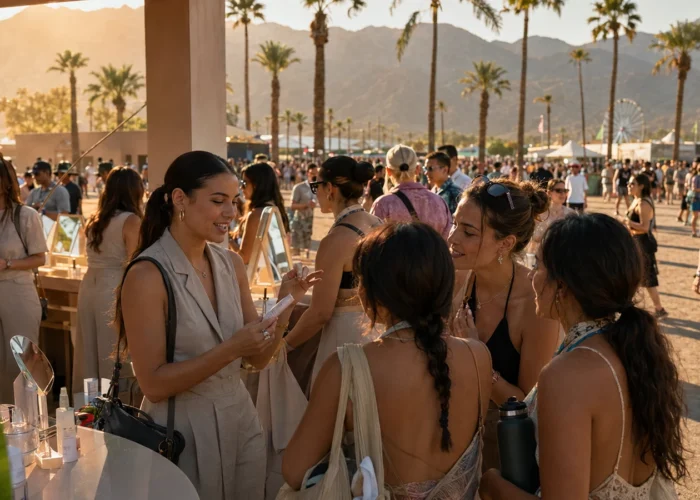
Byrdie reported that beauty brands at Coachella 2026 built pop-ups and product experiences around festival-goer needs, including makeup touch-up stations, immersive branded spaces, drive-thru beauty moments, sunscreen sampling, deodorant sampling, photo ops, and product-led activities.
The common thread is simple: each brand was trying to get a reaction in a crowded cultural setting. Some wanted trial. Some wanted content. Some wanted relief from heat, sweat, or festival fatigue. The activation had to earn attention in a place where guests already had plenty to look at.
Insight: The real value is not the booth, the backdrop, or the sample alone. The value is the guest reaction the brand earns in the middle of everything else competing for attention.
Plan Your Next Activation With the Right Team
If your campaign depends on real guest interaction, staffing is not a detail; it is the strategy.
PremierStaff supports experiential campaigns with trained brand ambassadors, product educators, and event teams who know how to engage, guide, and convert in live environments.
👉 Get a custom experiential staffing plan tailored to your campaign
👉 Ensure every guest interaction delivers measurable impact
Connect with the PremierStaff team before your activation goes live.
What does an experiential marketing agency do for a brand?
An experiential marketing agency turns a live event into a brand interaction. That may include activation planning, guest-flow design, staff briefing, product education, lead capture, and on-site campaign support. For brands that want the staffing side handled with trained, brand-facing talent, PremierStaff’s experiential marketing support can help connect the campaign idea to the people guests actually meet.
What types of experiential activations do agencies produce?
Experiential agencies often support pop-ups, product launches, sampling campaigns, live demos, photo moments, and brand activations at major events. The format depends on what the brand wants guests to do: try a product, ask a question, scan an offer, share content, or remember the brand after leaving. PremierStaff has also covered real-world brand activation campaigns for brands looking at format ideas.
How do experiential agencies staff their campaigns?
Experiential agencies usually staff campaigns with campaign leads, brand ambassadors, product educators, engagement specialists, and support staff. The goal is not to place people randomly around the activation. Each person should know what interaction they own, what questions they can answer, when to hand off a guest, and how to keep the brand voice consistent in person.
What is the difference between an experiential marketing agency and a brand activation company?
The terms often overlap. A brand activation company usually focuses on bringing a campaign or product moment to life, while an experiential marketing agency often takes a wider view of the guest journey, interaction, staffing, and measurement. In practice, both should care about what guests do inside the brand moment. PremierStaff’s guide on brand activations at sporting events shows how that difference plays out in fast-moving environments.