

Daniel M., CEO - Premier Staff
Trade show staffing positions you as the face of a brand’s ROI. At Premier Staff, we look for individuals who treat every check-in and product demo as a critical touchpoint. The talent that understands reliability and flow is the talent that works every season.
Want to Elevate Your Brand Ambassador Staffing Agency NYC Plans?
Weddings succeed or fail based on the people managing the service on the ground. Investing in professional, trained waiting staff ensures meals are served smoothly, guest areas stay organized, and your reception flows exactly as planned.
Starting a career through a trade show staffing agency is one of the most reliable ways to enter professional event work and secure consistent, well-run assignments. Trade shows operate on fixed schedules, high attendee volume, and strict exhibitor expectations, leaving little room for error on the show floor.
If you are asking how to start working with a trade show staffing agency, the answer comes down to understanding how these agencies operate and what they value most. Trade show staffing companies are responsible for protecting brand ROI during fast-paced, high-visibility events. As a result, they prioritize individuals who can manage pressure, follow the process, and maintain guest flow during peak moments.
This short read explains how trade show staffing works, what agencies look for when hiring, and how entry-level trade show temp work can turn into dependable, higher-value trade show staff jobs. It also outlines the core trade show team roles you can expect on the floor and how to position yourself for repeat bookings rather than one-off gigs.
Executive Summary
To successfully start working with a trade show staffing agency, candidates must prioritize operational reliability and master core onsite roles to transform temporary gigs into a consistent, professional career path.
What Is Trade Show Staffing
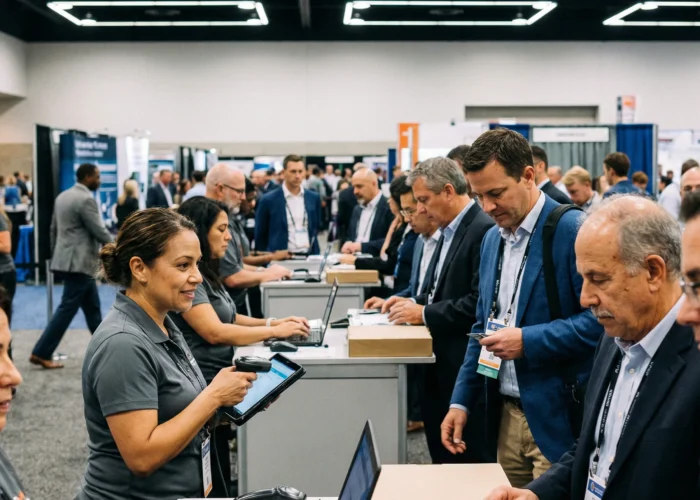
Trade show staffing refers to the placement of trained personnel by a trade show staffing agency to support exhibitors during live events. These professionals ensure booths operate smoothly from opening to closing by managing attendee interactions, maintaining guest flow, and protecting data accuracy.
Most trade show staffing companies provide staff for roles such as:
- Registration and badge scanning
- Lead capture and data verification
- Booth support and attendee qualification
- Product demonstrations and on-floor coordination
Trade shows are driven by timing and volume. Doors open at a fixed time, traffic surges after keynotes, and exhibitors rely on staff to keep lines moving without disruption. When staffing is underprepared, the first breakdown usually appears in the line, followed by rushed conversations and missed leads.
If you are pursuing trade show staff jobs, expect structured tasks performed repeatedly and precisely, long periods on your feet, and clear accountability for guest experience and lead quality. This is why trade show staffing agencies focus on process, reliability, and execution over improvisation.
Why Work Through a Trade Show Staffing Agency
Working with a trade show staffing agency provides the necessary structure to a fast-moving environment where mistakes can be costly. Agencies possess a deep understanding of venue regulations, exhibitor expectations, and show-floor logistics, ensuring that staff arrive with clear instructions and optimized call times.
Agencies also handle the complexities of scheduling, onboarding, and legal compliance, removing the burden of negotiating pay or hours on the fly. This organized approach is essential as the industry prepares for the global market to hit $2.1 trillion by 2032. According to Cvent’s 2025 event statistics, almost 70% of corporate events organized in North America in 2025 are expected to take place in person, marking a significant shift back to face-to-face engagement. This rapid expansion has driven a higher demand for professional staff who can execute flawlessly without supervision gaps.
Reputable trade show staffing companies protect their teams by placing them in organized environments with well-defined roles. To understand the caliber of work required at this level, you can review brand activation examples to see how professional staff integrate into high-stakes environments. This professional structure is exactly how trade show temp work transforms into steady, repeat assignments.
Skills and Qualities Agencies Look For
A trade show staffing agency prioritizes reliability over personality. On busy show floors, consistency protects flow, data accuracy, and the exhibitor’s return on investment. Much like private bartending work, trade show staffing demands preparation over personality.
Agencies look for staff who demonstrate:
- Clear communication: short responses, calm tone, and the ability to follow directions without hesitation.
- Reliability: Early arrival, fast check-in, and no last-minute changes.
- Stamina: Long shifts on your feet while maintaining focus and professionalism.
- Basic technical comfort: Using tablets, badge scanners, and registration software correctly.
- Professional appearance: Neutral wardrobe, clean grooming, and awareness of brand guidelines.
A common on-site pattern is this: when badge scanning slows and lines begin to stack, the staff member who can reset the flow without escalation becomes the one agency request again. This is how trade show staff jobs turn into repeat bookings instead of single shifts.
How to Get Started
Getting booked through a trade show staffing agency is straightforward, but it requires intention. Agencies track responsiveness and follow-through from the first interaction.
Step 1: Research agencies in your region
Look for agencies that clearly outline pay rates, call times, wardrobe standards, and cancellation policies. If these details are vague, expectations on site usually are too.
Step 2: Build a focused profile
Highlight experience that proves you can manage people-facing work under pressure, such as hospitality, retail, promotions, or registration. Language skills, product demo experience, and comfort with event tech all help.
Step 3: Complete onboarding quickly
Credentialing requirements have increased going into 2026, especially at large venues with tighter access controls. According to Event Industry Trends Report, 68% of event organizers now require enhanced background checks and venue-specific certifications. Agencies using hybrid scheduling oversight notice accuracy and responsiveness early.
Step 4: Start with entry assignments
Accept early roles to build credibility. Consistent performance is how trade show temp work turns into reliable, higher-value trade show staff jobs.
Types of Roles You Can Expect
Most trade show staffing companies assign staff based on how well individual strengths match specific on-site needs. Understanding common trade show team roles helps you choose the right entry point and set clear expectations from your first assignment.
Booth Staff and Brand Ambassadors
Booth staff greet attendees, qualify interest, and direct traffic within the booth. When this role is rushed or understaffed, foot traffic leaks and engagement drops quickly. Strong booth staff protect flow while keeping interactions on brand.
Registration and Lead Capture
These roles focus on badge scanning, data verification, and managing surge periods after keynotes and sessions. Errors at registration create long lines and unusable lead lists, which is why trade show staffing agencies treat this function as mission critical.
Demonstrators and Product Specialists
Product specialists explain offerings, reset demos, and answer repeat questions throughout the day. Poor pacing in this role creates demo backlogs and shortens attendee dwell time, directly impacting exhibitor ROI.
Setup and Logistics Support
Logistics staff restock materials, manage back-of-house areas, and support booth resets. When this role breaks down, the entire booth slows, even if front-facing staff are performing well.
Knowing where you perform best allows a trade show staffing agency to place you more effectively and increases your chances of being rebooked for future trade show staff jobs.
Reality Check: A Typical Shift Schedule
To understand the stamina and discipline required for trade show staff jobs, it helps to see what a standard shift actually looks like. Trade show days are structured, fast-paced, and leave no room for late arrivals or missed handoffs.
- 07:30 AM Call Time
Check in with the trade show staffing agency lead for attendance verification, wardrobe inspection, and badge pickup. - 08:00 AM Stand-Up
Team briefing covering key talking points, exhibitor priorities, lead goals, and zone assignments. - 10:00 AM Peak Traffic Window
Doors open and high-intensity engagement begins. Expect three to four hours of sustained interaction, scanning, and crowd management. - 02:00 PM Rotation Period
Staggered breaks and position swaps to maintain energy levels and coverage across all trade show team roles. - 05:00 PM Wrap and Sign-Out
Lead data sync, booth reset, and official sign-out with the agency supervisor.
Arriving even five minutes late for the initial call time often results in losing the shift and future booking opportunities. This level of accountability is standard across professional trade show staffing companies.
Tips for Success in Trade Show Staffing
If you want a trade show staffing agency to keep booking you, success comes down to habits that protect the show day rather than flashy performance. Consistency and attention to detail are what separate one-time trade show temp work from repeat trade show staff jobs.
- Arrive early and prepared
The first fifteen minutes establish trust with agency leads and on-site supervisors. - Follow the approved script
Consistent messaging protects lead quality, brand alignment, and exhibitor confidence. - Protect data accuracy
One missed scan or incorrect entry can compromise the entire lead list after the show. - Anticipate traffic surges
Post-keynote and lunch periods create short, intense engagement spikes that require focus and speed. - Ask one clear question, then execute
Excessive back-and-forth slows the team and signals uncertainty during high-pressure moments.
These habits are how trade show staffing companies identify reliable talent and move individuals into more trusted trade show team roles over time.
Quick Start Checklist
Before committing to any trade show staffing agency, use this checklist to evaluate whether the operation is organized and aligned with professional show standards. Clear structure protects your time and increases your chances of securing repeat trade show staff jobs.
- Are call times, wardrobe guidelines, pay rates, and cancellation terms provided in writing?
- Is there a clear on-site hierarchy such as lead, captain, or supervisor for escalation?
- Does the agency provide training on event technology, venue rules, and show-floor protocols?
- Are trade show team roles clearly defined before the event?
- Is there a documented process for check-in, breaks, and end-of-day sign-out?
Agencies that answer these questions clearly are more likely to place staff on organized shows and support long-term growth from trade show temp work into dependable, repeat assignments.
Transitioning from Temporary Gigs to Core Roles
Starting with a trade show staffing agency gives structure to an industry that rewards precision, reliability, and consistency. When you understand how trade shows operate, choose reputable trade show staffing companies, and perform core trade show team roles well, opportunities compound quickly.
The staff who work every season are not the loudest or flashiest. They are the ones who arrive prepared, protect flow, and execute without friction. Treat each assignment as a long-term audition and trade show staff jobs shift from temporary gigs into a dependable, repeatable career path.
If you are ready to work with a team that values precision, apply to our roster to start your journey. (Or, if you are a brand looking for this level of talent, get a quote to build your team.)
Do I need prior experience to start?
No, but you do need proof that you can handle people-facing work and follow process under pressure. A trade show staffing agency values reliability more than a perfect resume. Many people start in entry-level trade show team roles like registration or booth support and build from there. A good next step is to apply for roles such as trade expo staff, where speed and accuracy matter more than prior show experience.
How much can I earn per event?
Pay varies depending on the role and event, but reputable agencies offer competitive, above-industry-average pay rates because they believe top-tier talent deserves to be well compensated. Reliability, professionalism, and exceptional service are recognized and incentivized, meaning high-performing staff are often rewarded with appraisals and pay increases. Your earning potential is not fixed; it scales as you demonstrate consistency and take on specialized responsibilities.
Can I work for multiple agencies?
Yes, as long as schedules do not conflict and communication stays professional. Many staff test more than one of the available trade show staffing companies before committing availability to the one that runs cleaner operations. For those looking for more flexible, high-energy roles across different activations, joining a roster for promotional staff can provide variety.
Are these full-time roles or temporary gigs?
It depends on your availability and market size. Most people start with trade show temp work, then move into lead or captain paths as trust builds. Multi-day conferences and large expos often create longer booking blocks. If you are looking for more structured environments, roles like conference staff typically offer steadier hours than single-day activations.