

Daniel M., CEO - Premier Staff
Want to Elevate Your Brand Ambassador Staffing Agency NYC Plans?
I always tell hosts to ask what the service will actually look like before agreeing to a catering proposal. The style you choose affects how many servers you hire, how dinner moves, and what your venue can realistically handle.
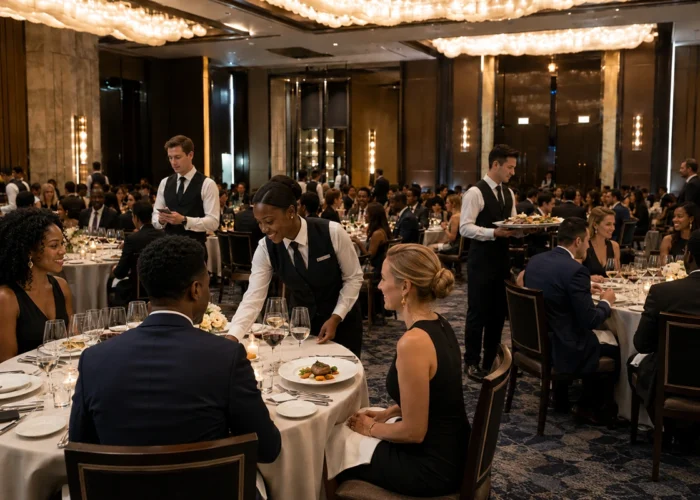
The types of table service you choose can change the guest experience, staffing requirements, venue setup, and overall event cost. Plated, buffet, family-style, butler-passed, French, Russian, and silver service each move food from the kitchen to guests in a different way.
For event hosts and planners, the key is not simply knowing the service name. You need to understand who serves the food, where the serving happens, how much space the service requires, and how much staff support it takes.
This guide breaks down eight common table service styles, explains how each works, and shows which options fit weddings, corporate events, galas, receptions, and VIP dinners.
Executive Summary
This guide explains eight types of table service for event hosts, including plated, buffet, butler-passed, Russian, French, family-style, and silver service. It shows how food reaches guests, why some service names are confusing, how each style affects staffing, and which venue limitations matter. Hosts can compare service styles, estimate staffing pressure, and choose an appropriate setup confidently.
How Food Actually Reaches Your Guests
How Food Moves From Kitchen to Guest
How the food moves gives an event host a clearer picture than the service name alone. Look at what happens right before the guest eats. Does the plate arrive ready? Does a server serve from a platter? Or does the guest take food from a tray?
At a cocktail reception, for example, butler-passed service puts hors d’oeuvres on trays and sends servers through the room while guests mingle. Cvent describes the same tray service for upscale receptions. A real hotel offer from Raffles Sentosa even includes butler-passed canapés during its cocktail reception.
The One Question to Ask Your Caterer
Ask one practical question: who touches the food last before the guest eats?
That single question sorts every style on a proposal. If the answer is the kitchen, the plate arrives finished. If the answer is a server standing at the table Service, the meal is being assembled in the room. If the answer is the guest, they are serving themselves from a platter, a station, or a tray.
For hosts comparing service options, Premier Staff’s catering staff page keeps the staffing side connected to that choice.
Once the plate path is clear, the names become easier to read.
What the 8 Table Service Styles Actually Look Like
Service names make more sense when you picture what happens after the food leaves the kitchen.
Plated, Buffet, and Butler-Passed Service
- American or plated service. Each dish arrives fully plated from the kitchen. The server carries it to the guest ready to eat, with no portioning at the table Service.
- Buffet service. Guests leave their table Service and choose food from one or more stations. The main difference is who serves the meal: guests make their own selections rather than receiving a finished main course at their seats.
- Butler-passed service. Servers circulate with trays while guests stand, talk, and move through the room. Guests take individual bites directly from the tray, a format commonly used for cocktail receptions.
Russian, French Cart, and Banquet French Service
- Russian service. Food comes into the dining room arranged on platters. Instead of receiving a plate already assembled in the kitchen, guests see the food presented as part of the table service.
- French cart service. A cart comes beside the table Service so part of the dish can be finished, carved, or prepared near the guest. The tableside preparation is the feature that separates it from platter service.
- Banquet French service. Food also arrives on platters, but the meal is served at the table Service rather than prepared on a cart. A gala proposal that simply says “French service” should therefore be clarified before the host signs off.
Family-Style and Silver Service
- English or family-style service. Shared dishes are placed directly on the table Service. Guests serve themselves and pass the food around, much like a family meal.
- Silver service. Food arrives on a serving platter, then a trained server portions it directly onto each guest’s plate. The serving itself happens in front of the guest.
Why French, English, and Silver Service Definitions Conflict
One caution: caterers sometimes use French, English, and silver service differently. Even industry references separate French service into different formats, so ask what guests will actually see before approving a proposal.
The practical version of that check is the question from the section above. A proposal that says “French service” could mean a cart beside the table Service or a platter presented at it, and those two answers do not cost the same to staff.
Once you can picture these movements, discussing the catering staff becomes far more concrete.
How Table Service Changes Your Staff Count
Two caterers quoting the same 120-guest awards dinner can price the food almost identically and staff it very differently. Proposals rarely explain why.
Plated service runs at roughly one server per 10–12 guests, so that dinner needs a team of 10 to 12. Buffet runs closer to one staff member per 18–20, counting station attendants and clearing around 6 or 7 for the same room. Premier Staff’s staffing guide covers other guest counts.
The difference is how much work happens after the food reaches the room. A plated dish is finished in the kitchen and carried out, which is why what food runners do sets the pace of a plated meal. Silver service portions at each seat. French cart service keeps a server with one table Service for a whole course.
Service style | Staffing pressure |
Plated | 1 server per 10–12 guests |
Buffet | 1 staff member per 18–20 guests |
Butler-passed | Moderate, rises with room density |
Russian | High |
French cart | Very high |
Banquet French | High |
Family-style | Moderate |
Silver | Very high |
Use the table Service for direction and get the number from your caterer once the service plan is set.
Staff counts only work if the room can handle the style.
Can Your Venue Handle the Service Style?
What to Check Before You Approve a Service Style
Check the room before guest preference enters the conversation: kitchen distance, aisle width, table Service space, and whether a cart can physically get through. Do this during event planning, not after the style is booked.
Which Table Service Styles Need the Most Space
A rooftop dinner with one small service elevator cannot run French carts; they block the aisles servers need. Cvent notes the same about French service: the cart needs room to work next to the table Service. Family-style has the opposite problem, since shared dishes need table space the glasses and centerpieces have already taken. Plated asks the least of a room.
Which Table Service Style Fits Your Event?
Matching Table Service Styles to Event Type
The room rules some styles out. The event decides the rest. A program with speeches needs dinner to move and guests seated, which is why caterers told BizBash they steer presentation events toward table service. A long guest list with mixed diets needs choice, so buffet. A standing reception needs butler-passed. A warm, slower dinner needs family-style.
When One Style Is Not Enough
For a VIP table Service, a French cart works better as one course than the whole meal. Buffets split too: one Chicago caterer adds a second line past 75 guests so the queue keeps moving.
Then Premier Staff’s waitstaff service is where headcount starts.
Need Staff for Your Table Service?
Your service style should determine your staffing plan, not the other way around.
If you’re planning a plated dinner, buffet, gala, wedding, VIP reception, or corporate event, share your guest count, service style, venue, and event schedule with Premier Staff. The team can help you plan the right mix of servers and support staff for smooth, professional service from setup through breakdown.
What is the most common table service style for large events?
Plated service is common for weddings, galas, awards dinners, and other seated events because every guest receives a finished plate from the kitchen. It also makes the staffing calculation easier to discuss before booking. Premier Staff’s staffing guide gives hosts a starting point for estimating servers based on guest count.
How many servers do I need for a plated dinner?
A useful planning range for plated service is roughly one server for every 10–12 guests. A 120-person dinner could therefore require around 10–12 servers, although menu, timing, venue layout, and other duties can change the final number. Use Premier Staff’s staffing guide before confirming your service team.
Does buffet service require fewer staff than plated service?
Usually, yes. A buffet may run around one staff member per 18–20 guests, compared with roughly one server per 10–12 guests for plated service. Buffet staff still have work to do around stations, clearing, and guest areas. Premier Staff’s catering staff can be matched to the service plan rather than guest count alone.
What should I ask my caterer before choosing a table service style?
Ask exactly what guests will see, how food reaches each table, who portions it, and whether any preparation happens beside guests. Those answers are more useful than relying on names such as French or silver service alone. Once the serving process is clear, discuss the required event waitstaff before approving the final proposal.