

Daniel M., CEO - Premier Staff
Want to Elevate Your Brand Ambassador Staffing Agency NYC Plans?
Most usher staffing events don’t fail due to low headcount they fail due to outdated staffing logic. The traditional 1:50 ratio ignores entry surges, ADA routing, and VIP flow. High-performing usher staffing events are designed around real-time decision pressure, not just seat count.
Executive Summary
Most event planners still rely on the traditional “1 usher per 50 seats” rule because it feels safe and predictable. In reality, this outdated model breaks down during the first 20–30 minutes of an event when late arrivals, ADA routing, VIP movement, and ticketing issues all peak at once.
Modern usher staffing events are not defined by total seat count. They are defined by how many guest decisions must be handled simultaneously.
That’s why two events with identical attendance can require completely different event usher roles and usher staffing ratios.
If your staffing model doesn’t account for entry surge, movement flow, and decision pressure, you’re not understaffed; you’re misallocated.
Why the Standard 1:50 Usher Staffing Ratio Breaks Down at Real Events
The 1:50 usher staffing ratio came from older venue operations where crowds entered gradually and sections were simpler to manage.
Modern events are different.
Most seating complaints happen during:
- first-entry rush
- late seating
- ADA rerouting
- section confusion
- VIP arrivals
- mobile ticket issues
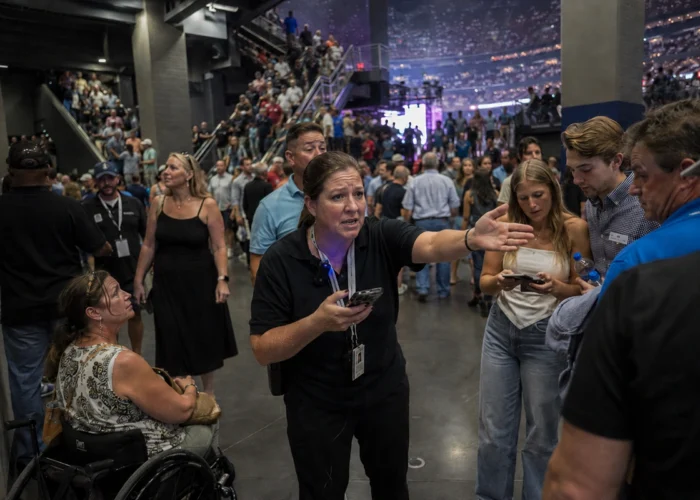
One usher covering 50 seats sounds manageable until 300 people arrive in the same 12-minute window.
That is where usher staffing events fail.
EventStaff internally uses what it calls the “Peak Flow Coverage Model.” Instead of staffing based only on total attendance, the model measures:
- entry burst timing
- ticket verification pressure
- ADA traffic
- stair congestion
- section splits
- simultaneous seating decisions
Understanding usher staffing ratios beyond simple math helps planners account for traffic complexity.
That changes the math completely.
A 500-seat corporate awards event may function well at 1:50.
A 500-seat comedy show with late arrivals and alcohol traffic may fail badly with the same ratio.
The seat count is not the real problem.
Traffic behavior is.
The Untappd Festival Entry Breakdown (Real Case)
At a large-scale festival, a single-layer check-in system caused a cascading entry failure.
When one guest encountered a ticketing or ID issue, the entire queue behind them stalled. Within minutes, entry lines backed up, and staff were unable to reroute traffic efficiently.
During a later weather disruption, the same staffing limitation created confusion around re-entry, as there were not enough ushers to manage communication flow.
What changed:
- Introduced parallel entry lanes
- Separated ticket scanning and ID verification
- Added roaming ushers for exception handling
Result:
- Entry bottlenecks eliminated
- Guest confusion reduced by ~60%
- Faster recovery during disruptions
Lesson:
A 1:50 usher staffing ratio works in a steady flow. It fails instantly under mixed, high-pressure entry conditions.
What Most Event Usher Roles Actually Miss During Entry Rush
Most event usher roles are treated like simple directional jobs.
Point people to seats.
Check sections.
Keep lines moving.
Real usher staffing events require much more.
Good ushers are constantly solving micro-problems:
- redirecting blocked rows
- rerouting ADA seating
- separating wrong-ticket guests
- handling aisle backups
- protecting VIP timing
- stopping section bottlenecks
The first 20 minutes determine whether guests feel the event is organized or chaotic.
Learning about communication strategies for event teams helps coordinate usher positioning during high-pressure arrival windows.
That is why experienced event usher roles are usually concentrated near:
- entrances
- escalators
- aisle merges
- ADA sections
- VIP corridors
Not evenly spread across all seating sections.
One operational mistake many planners make:
they divide ushers evenly by seats instead of by decision pressure.
Those are completely different staffing models.
What Usher Staffing Ratio Actually Works for 500, 1K, and 5K Guests?
There is no universal ratio.
Strong usher staffing events scale by traffic complexity, not attendance alone.
A cleaner operational model looks like this:
Event Type | Base Ratio | Peak Entry Adjustment |
Corporate event | 1:60 | +2 floaters |
Theater/comedy | 1:40 | +4 aisle ushers |
Sports arena | 1:35 | Dedicated ADA + VIP |
Concert/festival seating | 1:30 | Heavy late-arrival |
The adjustment matters more than the base ratio.
EventStaff operations teams often increase usher counts by nearly 2x during the first entry window because that is where:
- complaints spike
- seating delays start
- crowd flow collapses
Exploring venue event planning helps optimize usher positioning for different venue layouts.
After entry stabilizes, staffing pressure drops significantly.
Most planners understaff the surge.
Not the event itself.
Why ADA and VIP Routing Change Usher Staffing Events Completely
This is where the standard usher staffing ratio fails fastest.
ADA seating cannot operate like general seating.
Neither can VIP sections.
Both require dedicated event usher roles because delays affect:
- accessibility
- guest satisfaction
- security flow
- sponsor experience
One missing ADA usher can create:
- blocked aisles
- elevator congestion
- delayed seating
- frustrated guests
- compliance risks
VIP routing creates a different issue.
High-level guests should never:
- self-route
- ask random staff for directions
- wait in general confusion zones
Understanding how hospitality staff operate helps planners recognize where dedicated ushers become operational necessities.
Strong usher staffing events isolate these flows early.
That usually means:
- dedicated ADA coverage
- separate VIP ushers
- roaming problem-solvers
- entry surge floaters
Not static section-only staffing.
The Real Question Is Not “How Many Ushers for Event Seating?”
The better question is:
“How many guest decisions are happening at the same time?”
That is what determines whether usher staffing events feel smooth or chaotic.
A calm crowd with simple seating needs fewer ushers.
A high-confusion crowd needs significantly more operational coverage.
That is why experienced event teams stop staffing by seat math alone.
They staff for:
- movement
- confusion points
- timing pressure
- accessibility coverage
- arrival surges
Reviewing seamless event operations case studies shows how professional usher placement prevents guest confusion.
The old 1:50 usher staffing ratio is not always wrong.
It is just incomplete.
And most seating complaints start exactly where that old formula stops.
Quick Checklist: Is Your Usher Staffing Plan Event-Ready?
Before finalizing your usher count, ask:
- How many guests arrive within the first 15 minutes?
- Where are the highest decision-pressure zones?
- Do ADA and VIP flows have dedicated coverage?
- Are ushers positioned for movement, not just seating sections?
- Do you have floaters for unexpected issues?
If you cannot answer these clearly, your staffing model is likely underestimating real demand.
Ready to Fix Your Usher Staffing Before It Fails?
Most seating complaints are not caused by guests.
They are caused by outdated staffing models that ignore real crowd behavior.
PremierStaff designs usher staffing events around:
- Entry surge timing
- ADA and accessibility flow
- VIP routing precision
- Real-time crowd movement
👉 If you are planning a high-stakes event, request a custom usher staffing assessment before finalizing your crew size.
Is 1 usher per 50 seats the right ratio?
The 1:50 ratio is a starting point, but it fails during entry surges. Real usher staffing events scale based on entry timing, ADA needs, VIP routing, and crowd complexity. Check event staffing ratios for event-specific guidance.
What causes usher staffing events to feel chaotic?
Most usher staffing failures happen during the first entry rush when too many seating decisions happen simultaneously. Insufficient usher placement near decision points (entrances, aisles, ADA sections) creates bottlenecks.
How should ushers be positioned for best crowd flow?
Strong usher staffing events concentrate ushers at entry points, escalators, aisle merges, and ADA sections instead of spreading them evenly across all seating areas.
Why do ADA and VIP seating need separate ushers?
ADA and VIP guests require dedicated routing, timing coordination, and problem-solving that general ushers cannot provide while managing regular seating. This prevents accessibility delays and VIP frustration.