

Daniel M., CEO - Premier Staff
Want to Elevate Your Brand Ambassador Staffing Agency NYC Plans?
One thing I always tell servers before a premium golf event is this: do not wait for the room to tell you it needs help. At the U.S. Open, guests may leave for the course, come back warm, ask for water, then disappear again five minutes later. The best waiter is the one who uses those gaps to reset the space before anyone has to ask.
Should You Take a U.S. Open Waiter Banquet Shift?
A U.S. Open waiter banquet shift is not a regular restaurant shift with a better view. Guests move in and out of suites, sponsors host conversations, weather can change the rhythm, and the room still has to feel ready. Before you accept the shift, know what the job actually asks from you.
Executive Summary
If you are expecting a normal restaurant shift at the U.S. Open, you are going to feel the difference pretty quickly. The guide explains the real hospitality environment, what the shift demands, and whether this kind of premium event service fits your next career move. You’ll also see how the role changes across suites, tee-time movement, weather delays, VIP expectations, and client-facing hospitality spaces, so you can decide whether this shift actually fits your service style.
Before You Accept the Shift, Know What the Hospitality Space Is Built For
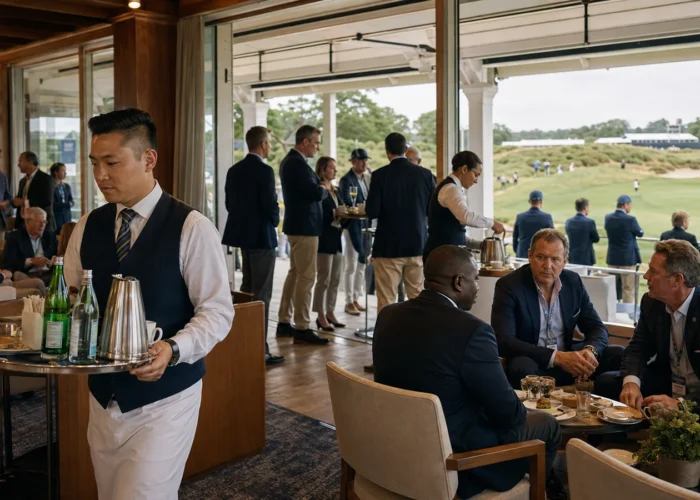
The U.S. Open hospitality spaces, like the USGA’s Village on 17 Luxury Suites, are actually built for premium guest hosting and not just your regular table service. These suites are designed for groups of 50 and include food and beverage service, covered patio viewing, and a sponsor-focused guest experience. So if you are working as a waiter banquet there, you are walking into a space where clients, executives, and guests are being hosted while the tournament is happening around them.
Now that definitely changes the pace of the job. Guests may come in for breakfast, step outside to watch the play, return for drinks, leave again for a viewing area, and come back with clients. So your role here is to keep the suite clean, calm, and ready each time they walk back in.
This role makes sense if you like service that supports the whole guest experience. If you only want a simple table-service shift where guests sit down, eat, and leave, this environment may feel too unpredictable for you.
What a Waiter Banquet Role Looks Like When the Golf Day Keeps Moving
Before the first guest wave
Do not think of setup as simply placing glassware and stocking drinks. At the U.S. Open, setup means preparing for guests who may arrive after shuttle movement, security screening, and a long walk into the course. Coffee, water, breakfast items, glassware, napkins, and dietary notes should be ready before the suite starts filling, because the first wave may not arrive slowly.
During the tee-time movement
Once play begins, guests may leave the suite to watch a pairing, follow a group, or spend time on a viewing patio. That is when the waiter banquet should clear used plates, refresh drinks, check the buffet, and reset tables before guests return. The job is less about waiting for an order and more about reading the gaps created by the golf schedule.
When guests return from the course
At the U.S. Open, guests may step out of the suite to watch play, walk the course, spend time on a viewing patio, or follow a pairing for a while. When they come back, they are not always looking for a full meal. Sometimes they just want cold water, coffee, shade, a clean table, or a quick refill before they head back out again.
That is where a waiter banquet has to read the moment. The suite should feel fresh when guests return, not like everyone left it sitting for the last ten minutes. Clear the used plates, reset the napkins, check the beverage station, and make the room feel ready before the next wave walks in.
When the day gets disrupted
At the U.S. Open, the plan can change fast. Fog can hold guests inside, traffic can delay arrivals, tee times can shift, and guests may have questions before anyone has a clear answer. In those moments, the suite still has to feel calm and ready.
If guests are stuck inside longer than expected, keep coffee, water, breakfast items, and tables fresh. If play resumes and everyone leaves at once, use that quiet stretch to clear plates, reset the room, and get the space ready before the next wave comes back.
What are the U.S. Open Schedule Changes for waiter banquet ?
A good way to understand this shift is to stop thinking about meal periods and start thinking about movement windows.
The official 2026 U.S. Open tee times confirm that the championship at Shinnecock Hills runs from June 18-21, while the USGA’s parking and transportation plan shows that event movement affects the venue across the full championship week, June 15-21. That matters for waiter banquet because guests are not arriving like restaurant diners. They are coming through traffic, shuttles, security, walking routes, viewing areas, and hospitality spaces before they ever sit down for coffee or food.
For a waiter’s banquet role, the rush can start before the golf does. If guests arrive early from shuttles or hospitality entrances, the suite needs to look ready before the first wave walks in. If a group leaves to follow play, that is your reset window. If traffic, weather, or tee-time changes hold guests inside longer, breakfast, coffee, water, and tables need to stay fresh past the time you expected.
What this means for you: If you need a fixed service rhythm, this shift will feel unpredictable. If you can reset quickly while the day moves around you, you will understand the job faster than most first-timers.
Weather Delays Show Why This Job Is About Composure
A current example:
During the 2026 U.S. Open opening round at Shinnecock Hills, play was suspended at 7:05 a.m. ET due to dense fog and resumed at 9:05 a.m. ET. That two-hour delay changed the waiter banquet job immediately.
Breakfast service had to stay fresh longer. Guests remained inside instead of heading to the course. Coffee and water needed constant restocking. The room could not look stalled or messy while sponsors waited for updates. When play resumed, guests left in waves, and the suite had to be reset before they returned.
The waiter banquet who panics during delays loses the room. The waiter who uses the delay to reset, restock, and refocus keeps the host looking prepared.
So if a delay makes you panic, this is not the easiest event to start with. If you can use a delay to reset the room before guests notice the shift, you are closer to a premium hospitality level.
The Difference Between Being Helpful and Being Premium
Helpful Service Reacts, Premium Service Reads the Room
Helpful service is when a guest asks for water, and you bring it. Premium service is when you notice that half the suite just came back from watching a play near the 17th, and you already have water, coffee, and clean tables ready before anyone has to look around for help.
That difference matters at the U.S. Open because the hospitality setup is built around movement. The Village on 17 Luxury Suites is designed for groups of 50, with food and beverage service inside the suite and a covered patio for viewing. So guests are not staying in one neat service pattern. They may sit inside for breakfast, step out to the patio, follow a pairing, then return with clients who expect the space to feel untouched.
A helpful waiter banquet reacts when the room gets messy, but a premium waiter uses the quiet gap while guests are outside to make the room look ready again. Plates are cleared, glasses are replaced, coffee is checked, napkins are straightened, and the sponsor does not have to wonder whether the suite still looks good for their next guest.
Premium Service Protects the Host When Guests Arrive Unevenly
Another good U.S. Open example is transportation. The USGA’s parking and transportation plan explains that fans reach Shinnecock Hills through expanded Long Island Rail Road service, shuttle transportation, satellite parking, ferry connections, ride-share areas, and other access points. The MTA’s U.S. Open travel guide also notes that LIRR guests arrive at a temporary platform near Stony Brook Southampton, go through ticket validation and security screening, then cross a pedestrian bridge before reaching the championship grounds.
For a regular waiter banquet , that might sound like a guest-arrival issue. In a premium hospitality suite, it becomes a service issue. Some guests may arrive early and want coffee right away. Others may come in late, warm, tired, or slightly irritated from travel. A helpful waiter waits for the room to fill and responds to requests. A premium waiter expects the uneven arrival pattern and keeps the suite ready for both groups: fresh coffee for the early guests, cold water for the late arrivals, clean tables for the sponsor’s next conversation, and a calm tone when people walk in asking where everyone else is.
Now that’s a real difference you should consider. Premium service does not make the host explain the delay, apologize for the room, or chase down basics. The waiter banquet quietly absorbs the messy parts of the day so the sponsor can keep hosting.
Can You Handle a Shift That Moves With the Tournament?
By this point, the difference should be clear. A casual dining shift usually gives you one table, one order, and one meal rhythm. A U.S. Open hospitality shift keeps moving around tee times, patio viewing, sponsor guests, weather delays, transportation problems, and return waves from the course. If you like reading the room before someone asks for help, this role will make sense. If you only enjoy a predictable table-service shift, it may feel like too much movement.
Is Premium Golf Hospitality the Right Next Step for You?
Premium event service rewards composure, awareness, and service judgment. General waiter banquet roles are trained on the job, but championship-level hospitality is different. You’re expected to think ahead, adapt fast, and keep the space ready without being told.
According to BLS occupational data, general waiter banquet roles have steady openings due to replacement needs, but premium event work separates experienced servers from novices.
If this kind of high-awareness service sounds like the next step in your hospitality career, apply through PremierStaff’s careers page and share the premium service experience you already have.
What do waiters do at golf tournaments?
Waiters at golf tournaments keep hospitality suites, sponsor lounges, and viewing areas ready while guests move in and out during play. At the U.S. Open, that means refilling drinks, clearing quietly, resetting tables, and staying ahead of the tournament rhythm. For a wider look at staffing around major sporting events, see PremierStaff’s sports event staff in NYC page.
What is the difference between a waiter and a banquet server?
A waiter usually serves guests more directly, while a banquet server’s duties often include buffet support, beverage stations, table resets, and larger event flow. In golf tournament hospitality, the role can feel like both because you are serving guests while keeping a premium suite ready for return waves. PremierStaff’s event servers in NYC page gives more context on event server work.
What does formal event service mean at the U.S. Open?
Formal event service means calm, polished service that does not interrupt the guest experience. In a U.S. Open suite, that could mean clearing plates during a client conversation, refilling water quietly, or resetting the room before guests return from the course. If you want to understand the polished appearance side of the role, read this guide on waiter dress code.
What does VIP service mean in golf tournament hospitality?
VIP service means making the guest and host feel looked after without making them manage the service. A VIP server notices low coffee, uneven arrivals, sponsor conversations, and guests returning from the course before anyone has to ask. This is the same mindset behind staffing a VIP lounge with polished hospitality professionals.