

Daniel M., CEO - Premier Staff
Want to Elevate Your Brand Ambassador Staffing Agency NYC Plans?
I’ve seen experiential events with great creative still feel flat because the staff were only briefed on where to stand and what to say. Guests do not move through an activation like a script. They ask questions, react differently, and test the brand in real time. If the team does not understand the story behind the event, the experience becomes a setup with people standing around it.
Why Experiential Events Need Staff Who Know the Brand
Experiential events can look ready on paper and still feel flat in the room. The set is built, the product is placed, the talking points are approved, and the timeline is clear. Then guests arrive with real questions, different moods, and no patience for staff who sound like they just read the brief.
EXECUTIVE SUMMARY
This blog explains why experiential events fall flat when staff only know the schedule, setup, and talking points. It shows how deeper briefing, brand fluency, guest-reaction training, engagement leads, and better measurement help staff carry the brand in real conversations, not just manage the room once guests arrive
A Perfect Setup Can Still Feel Empty
A planner can spend weeks getting the creative right and still lose the room in the first ten minutes. That is the hard part about experiential events. Guests do not respond to a floor plan. They respond to the person who greets them, explains the moment, answers the first question, and makes the brand worth staying with. A beautiful setup can still feel passive if the staff only know where to stand.
Look at how strong brand activations are talked about in the industry. Event Marketer’s activation coverage regularly focuses on what people actually do inside the experience: trial, content capture, interaction, movement, and social sharing, not only how the space looked. Their reporting on brand activations shows how much of experiential work depends on what happens once guests are physically inside the moment.
That is the staffing gap. A standard event brief prepares people for movement: entrance, layout, vendor calls, escalation, and timing. A live experiential activation asks more from the room. Staff has to read curiosity, explain the brand without sounding rehearsed, and know when to keep the conversation light versus when to bring in a deeper product or brand lead.
PremierStaff would treat the staff brief as part of the activation itself. For experiential marketing, the team should know the guest’s first reaction point, the brand’s tone, the handoff moment, and the questions that usually appear once people stop being polite.
A Morning Brief Cannot Build Brand Fluency
A same-day briefing can cover uniforms, arrival time, the event layout, basic talking points, and who to call if something breaks. It cannot build brand fluency.
That difference shows up the second a guest goes off-script. Someone asks why the product is different. Someone challenges the claim. Someone likes the visual setup but does not understand the brand. Someone wants to know if the product fits their real life, not the campaign line. Staff who only heard the brief that morning usually repeat the approved phrase or pass the guest away.
Festival and creator-led activations make this even more obvious. Vogue Business has reported on brands using festival moments around Coachella to create social content, influencer interaction, and in-person brand touchpoints. Those environments move fast because guests are half-consumers, half-content creators, and staff have to understand the brand well enough to guide the moment without flattening it into a script.
A better briefing gives staff time to understand the brand before they represent it. They should know the audience, emotional hook, product context, likely objections, and the difference between a casual guest, a content creator, a buyer, and a VIP.
PremierStaff would not rely on a quick pre-shift huddle for an activation built around guest conversation. The team would be briefed around brand fluency: what to say, how to adapt, when to ask a sharper question, and when to bring in the brand lead. That preparation is what separates experiential event staffing from ordinary room coverage.
Staff Need a Conversation Path Before Guests Arrive
Brand immersion is the part many planners underestimate because it does not look like “staffing” on a quote. It is the work that happens before the event, when staff learns the campaign beyond the approved script. They need to understand what the brand wants guests to feel, what the guest is likely to notice first, which product details matter, and what kind of conversation should happen before the guest walks away.
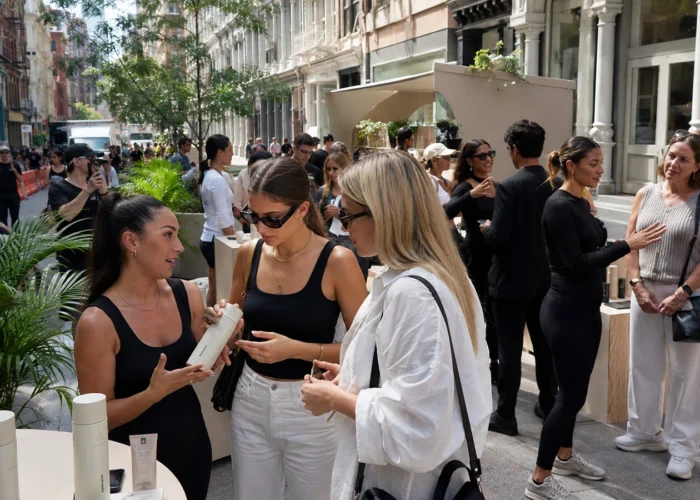
Glossier’s experiential retail and pop-up work has been covered as part of fashion’s shift toward deeper customer connection through physical retail and immersive brand spaces. The lesson for staffing is clear: if the space invites people into a brand world, staff cannot behave like neutral greeters. They have to carry the tone of that world in conversation.
A useful brand immersion brief should cover:
- the brand story in plain language
- the guest mindset before entry
- common questions guests are likely to ask
- likely hesitation points
- the difference between casual curiosity and serious interest
- the handoff point for founders, sales leads, product experts, or VIP contacts
PremierStaff would brief the team around the guest journey, not only the venue map. For live experiential work, staff should know where curiosity begins, where confusion usually appears, and what kind of conversation the brand wants to earn.
Got it. Going forward: no one-line section openers, no link dumps, and every source link will sit inside the sentence on a 1–2 word anchor. Here are the next sections with that fixed.
Experiential Staff Have to Read the Guest Reaction
A regular event team can keep a line moving, check names at the door, and direct guests toward the right area. An experiential team has to notice what the guest is actually doing once they enter the brand moment. Are they curious enough to stay? Are they only taking a photo? Are they confused by the product? Are they waiting for someone to explain what the activation is supposed to mean?
That difference shows up in real activations. Coach’s “Life Coach” pop-up in New York was built around themed rooms, self-discovery, tarot readings, carnival-style elements, and a deliberately strange check-in journey, according to Architectural Digest. A staffer in that kind of space cannot behave like a standard greeter. They have to understand the tone of the room, explain enough without killing the mystery, and guide guests who may not immediately understand what they walked into. (Architectural Digest)
For a product-led activation, the pressure is different. A guest may touch the product, ask if it fits their routine, compare it to something they already use, or look for a reason to care. Staff trained only on guest flow can move people through the space. Staff trained on guest reaction can tell when to slow down, ask a better question, or hand someone to a product specialist.
PremierStaff would staff this kind of activation around conversation moments, not only coverage points. The team handling experiential events should know which guests need a light prompt, which guests need a deeper explanation, and which guests should be handed to the brand team before the moment goes cold.
A Floor Manager May Miss What an Engagement Lead Sees
A floor manager is usually watching timing, staffing posts, breaks, vendor issues, and physical flow. An engagement lead is watching whether the activation is actually landing. That is a different job. If guests are walking through too quickly, repeating the same confused question, skipping the hero product, or taking photos without speaking to staff, the room may look busy while the brand moment is underperforming.
You can see why this role matters in modern experiential campaigns. Axios reported that AI companies like Anthropic, IBM, and Cursor have used pop-ups and in-person events to build awareness and trust, including Claude Café in New York. For complex categories like AI, the live staff interaction becomes part of the explanation layer because guests are not only being entertained, they are trying to understand what the brand does and whether it feels approachable. The Axios report also noted that Anthropic’s pop-up drew thousands of visitors and major social media attention.
In a room like that, a floor manager can keep the queue organized, but someone still has to watch the quality of the conversations. Are staff explaining the concept clearly? Are guests leaving with a better understanding than they arrived with? Are questions being passed around because the team is underbriefed? Those are engagement-lead questions, not logistics questions.
PremierStaff would treat the engagement lead as the person responsible for live adjustment. If the first staff line is not working, the lead changes the prompt. If guests are skipping the main interaction, the lead moves staff closer to the hesitation point. If staff keep getting the same question, the lead gives the team a sharper answer while the event is still running.
Attendance Does Not Prove the Activation Worked
A packed experiential event can still fail quietly if guests move through it without understanding, trying, asking, or remembering anything. Attendance tells you who showed up. It does not tell you whether the staff converted curiosity into interaction. For experiential events, the better measurement starts inside the room: dwell time, conversation quality, repeat questions, product trial, sentiment, scan quality, and handoffs to the brand team.
Retail-style experiential campaigns prove the point. Patagonia’s Worn Wear work, often referenced in experiential marketing discussions, used repair stations to connect the brand’s sustainability position to a useful in-person service. MPI’s case example frames it as an activation rooted in operational commitment rather than borrowed messaging. Staff in that type of event are not there to recite slogans. They have to explain the service, handle customer stories, and make the brand value feel practical.
What Planners Often Count | What Better Staffing Reveals |
Total attendance | Whether guests actually stopped and interacted |
Photos taken | Whether guests understood the brand message |
Samples handed out | Whether staff explained the product clearly |
Leads collected | Whether the leads came from real conversations |
Busy room energy | Whether guests asked deeper questions or moved on |
A weak measurement plan might count visitors and photos. A stronger one asks what happened between the guest and the staff. Did the guest understand the product? Did they stay longer than expected? Did they ask a deeper question? Did they scan, sign up, sample, book, or ask for follow-up? Those signals tell the planner whether the activation had actual weight.
PremierStaff would connect the staff brief to the measurement plan before the event starts. If the goal is product education, staff should be trained to answer and route questions. If the goal is trial, the team should watch bottlenecks around sampling. If the goal is brand affinity, the experiential team should know what kind of guest reaction the brand is trying to earn.
The Brief Decides What Staff Can Do in the Room
A strong experiential event does not come from creative alone. The creative gives the room a reason to exist, but the staff decides whether guests understand what to do with it. If the team only knows the setup, the brand moment stays shallow. If the team understands the story, the guest psychology, and the conversation path, the same room starts working harder.
That is why the brief has to sit earlier in the process. A planner cannot wait until event morning to explain brand tone, likely guest questions, handoff rules, and the difference between a casual visitor and a serious prospect. Staff needs time to practice the difference between a friendly welcome and a useful brand conversation.
The best experiential work often feels natural because the team has already rehearsed the invisible parts. In the Coach pop-up, the rooms were unusual enough that guests needed guidance without the space being over-explained. In Patagonia’s Worn Wear, the interaction worked because the staff could connect the repair service to the brand’s larger promise without turning it into a speech.
PremierStaff would build the staff plan around that same principle. For experiential marketing, the brief should tell staff what guests are likely to feel, ask, resist, misunderstand, and remember. That is the part that turns a good-looking activation into a working brand moment.
What makes experiential events work successfully?
Experiential events work when the staff can carry the brand in real conversation. The setup may bring guests in, but the staff decides whether they stay, ask questions, try the product, or understand the message. A stronger experiential team is briefed on brand story, guest behavior, and handoffs before the event opens.
How long should staff be briefed before an experiential event?
A short morning brief can cover layout, uniforms, and timing, but experiential staff needs more time to understand the brand, audience, product context, and conversation path. The exact timing should match the activation’s complexity. For deeper brand moments, experiential staffing should be planned before event day.
Can regular event staff work experiential events?
Regular event staff can work experiential events if they are briefed beyond logistics. They need to understand the campaign, guest mindset, talking points, objections, and handoff rules. Without that preparation, they may manage the room but miss the brand conversation. PremierStaff’s experiential marketing approach should account for that difference.
Why does an experiential event need an engagement lead?
An engagement lead watches whether guests are actually responding to the activation. A floor manager may track timing and staff placement, but the engagement lead watches guest behavior, weak prompts, repeated questions, and missed handoffs. For experiential events, that live adjustment keeps the activation from becoming passive.