
- How Is Experiential Marketing Campaign Cost Calculated?

Executive Summary
Student activations work best on campus when they are simple, fast, and built for real student behavior. High-performing campaigns focus on clear messaging, quick interactions, and structured staffing activities for students that maintain flow during peak traffic. When format, location, and staffing align, activations move smoothly without bottlenecks or drop-off. The result is consistent participation, stronger engagement, and measurable outcomes.
Introduction: Student Activations and What Works Best on Campus
Student activations are cost of experiential marketing campaign one of the most effective ways to engage Gen Z audiences on campus. But what works best is not always the biggest or most creative idea. It is the activation that students can understand instantly and join without effort.
If you are planning a campus campaign, success depends on how quickly students move from noticing your setup to participating in it. On busy campuses, attention is limited. Students are constantly moving between classes, social spaces, and commitments. You have only a few seconds to make your activation clear and worth their time.
This is where well-planned staffing activities for students make a real difference. When roles are clearly defined and aligned with the flow of the experience, participation stays consistent even during peak traffic.
In simple terms, student activations work best on campus when they are easy to join, quick to complete, and supported by a team that keeps everything moving without confusion or delay.
Student activations do not fail because of ideas. They fail because execution does not hold under real campus conditions. The brands that win are the ones that design for speed, clarity, and consistency from the start.
— Daniel Meursing, CEO of Premier Staff
Student activations are cost of experiential marketing campaign not just about visibility. They are about creating high-intent, real-world engagement with a highly responsive audience.
Experiential marketing data consistently shows that 85% of consumers are more likely to make a purchase after attending a branded live event, and 74% report significantly higher brand recall compared to traditional advertising channels. On campus, this impact is even stronger because students are naturally curious, social, and open to new experiences.
Why Campus Environments Amplify Results
Students behave differently from typical consumers. Their environment encourages quick decisions, social sharing, and peer influence.
According to an EY study cited in a 2025 student marketing playbook, 73% of Gen Z actively recommends brands they love to their family and friends, making every positive campus interaction a potential peer-driven ripple effect. On campus, students are:
- Social and influence-driven
- Open to trying new products and services
- Likely to share experiences instantly with peers
- Constantly moving through high-traffic zones
This creates a unique opportunity for brands to engage at scale without relying only on digital channels. As we explore in our guide to behind the world’s most memorable brand activations at live events, the formats that travel furthest are the ones rooted in genuine, in-person interaction not just clever creative.
What Student Activations Help You Achieve
When executed cost of experiential marketing campaign correctly, student activations deliver measurable outcomes, not just impressions:
- Product trials—Students experience the product directly, which increases trust and recall
- Brand recall—Quick, memorable interactions improve long-term recognition
- Peer-driven awareness—Students influence each other through word-of-mouth and social sharing
- Lead generation—Simple capture methods convert engagement into usable data
The Execution Gap Most Brands Miss
High foot traffic alone does not guarantee success. Many student activations fail because they are designed for attention but not for flow. 98% of consumers create digital or social content at experiences and events, with all of them sharing it online but only if the experience is smooth enough to inspire participation in the first place.
To perform consistently, your activation must:
- Be easy to understand within seconds
- Deliver a fast and structured interaction
- Be supported by clear staffing activities for students
- Maintain flow during peak campus traffic
Without these elements, even the most creative setup will struggle to convert attention into meaningful engagement.
Student activations work best when strategy and execution align. When they do, they cost of experiential marketing campaign become one of the most efficient ways to drive engagement, recall, and action on campus.
Student Activations Goals That Decide the Right Format
Student activations work best on campus when the format matches a clear goal. Without a defined objective, even high foot traffic will not translate into meaningful results.
Before choosing how your activation looks or runs, decide what you want students to do. The goal shapes the format, the messaging, and the staffing activities for students needed to support it.
Match Your Goal to the Right Activation Format
Goal | What Works Best |
Awareness | Bold visuals, quick photo moments, and street team interactions. Focus on visibility and volume rather than depth. |
Trial | Sampling with one clear use case, short demo loops under 2 minutes, and “try it now” setups with immediate feedback. |
Lead Capture | QR-based sign-ups, assisted capture, and short interaction paths before asking for information. |
Each goal requires a different level of interaction. Trying to combine multiple goals into one experience often creates confusion and slows participation. This mirrors what we cover in how to plan a brand activation event with measurable results; clarity of objective is the foundation on which everything else is built.
The One CTA Rule for Student Activations
Every student activation should guide students toward one clear next step:
- One action
- One message
- One outcome
When staff present multiple options, students hesitate. On campus, hesitation leads to drop-off.
How Staffing Activities for Students Support Each Goal
The right staffing structure ensures that your goal is executed without friction:
- For awareness, greeters and brand ambassadors focus on visibility and quick engagement
- For trial, station leads manage consistent demonstrations and fast resets
- For lead capture, dedicated support ensures data collection does not slow the experience
When goals and staffing activities for students are aligned, the activation feels simple to the student. That simplicity is what drives participation and results.
Student Activations Formats That Are Easy to Run
The best student activations are not just creative. They are reliable under pressure. What works best on campus is a format that stays smooth when traffic increases and attention spans drop.
Simple formats perform better because they are easy to repeat, easy to understand, and easy to cost of experiential marketing campaign reset. When 50 students arrive at once, complexity creates delays. Simplicity keeps the experience moving.
Proven Student Activation Formats and When to Use Them
Format | How It Works |
Fast Demo Loop | Students walk up, try the product, and leave. Clear start and finish. Designed for quick repetition during peak traffic. |
Sampling with One Use Case | One product, one message, one quick handoff. No choices or comparisons that slow decision-making. |
Mini Challenge with Instant Reward | A short game or task with a clear win condition and immediate payoff. Drives quick participation in busy areas. |
Vote or Feedback Wall | A simple question with a fast response. Low commitment and high engagement without slowing flow. |
Photo Moment with Fast Reset | Visually appealing setup with a clear entry and exit. Staff must reset quickly to avoid line buildup. |
Two-Lane Design | One lane for quick interactions and another for deeper engagement. Helps manage different levels of interest without slowing either group. |
For real-world inspiration, our breakdown of 10 brand activation campaigns that went viral shows how the simplest formats consistently outperform complicated ones when deployed in high-traffic environments.
What Makes These Formats Work on Campus
Across all high-performing student activations, the pattern is consistent:
- The interaction is easy to understand in seconds
- The experience has a clear start and finish
- The reset time between participants is minimal
- The format can handle sudden increases in traffic
If a format cannot reset quickly, it will slow down during peak hours. Once that happens, lines form and participation drops.
How Staffing Activities for Students Support Format Performance
Even the best format fails without the right execution. This is where staffing activities for students play a critical role.
- Greeters bring students in quickly without long explanations
- Station leads keep the interaction consistent every time
- Floaters reset stations and restock without interrupting flow
- Queue support manages expectations during busy periods
When format and staffing work together, the activation scales naturally. When they do not, even a strong concept struggles under real campus conditions.
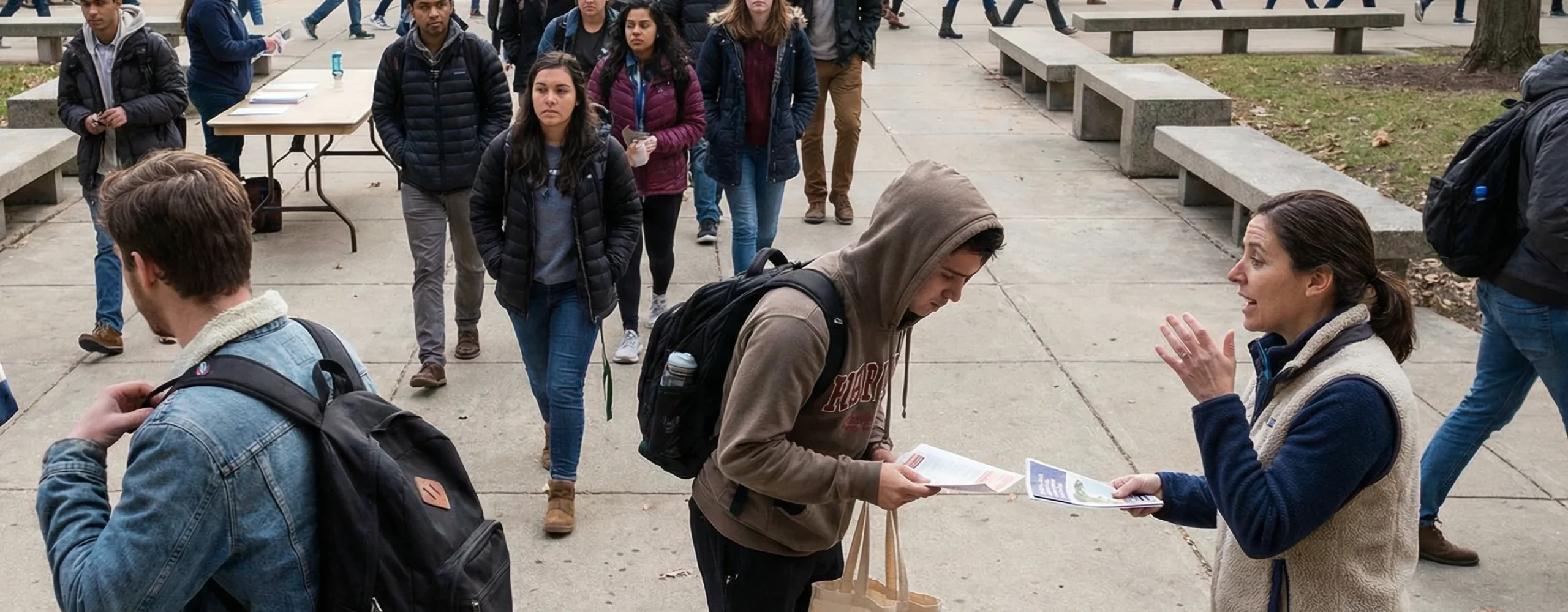
Staffing Activities for Students That Keep Participation Consistent
Staffing activities for students are what keep a student activation running smoothly when traffic increases. The idea may attract attention, but it is the team on the ground that maintains flow, clarity, and consistency.
On campus, one person cannot manage everything. When a single staff member tries to greet, explain, run the activity, and handle the queue, the experience slows down quickly. Clear role separation solves this problem.
The Student Activation Staffing Role Model
Role | Responsibility |
Greeter | Stops students, delivers a quick hook, and directs them into the experience |
Station Lead | Runs the interaction and ensures it is consistent every time |
Capture Support | Handles QR scans or sign-ups without slowing the main flow |
Floater | Resets stations, restocks materials, and fixes small issues quickly |
Queue Support (Peak Only) | Manages lines and sets expectations before students reach the station |
Team Lead | Monitors overall flow and adjusts staffing as needed |
Staff Capacity Rule
1 staff member can effectively handle 15 to 20 students per cycle
When this limit is exceeded:
- Conversations become rushed
- Instructions become unclear
- Reset times increase
- Lines begin to form
Understanding the right role structure is covered in detail in our corporate brand activation staffing job roles, KPIs, and reporting framework; the same role-based principles apply directly to campus environments.
Why Role Clarity Matters
Well-defined staffing activities for students ensure that each part of the activation runs independently without overlap:
- Greetings do not delay participation
- Participation does not delay capture
- Reset does not interrupt the next interaction
This separation keeps the experience smooth, even during peak campus traffic.
How to Maintain Consistency Throughout the Day
Performance often drops later in the day due to fatigue or message drift. To prevent this:
- Run a quick team briefing before the activation starts
- Do mid-shift check-ins to correct issues early
- Keep messaging simple and consistent across all staff
When staffing activities for students are structured and consistent, the activation feels effortless to participants. That is what keeps engagement steady from the first student to the last.
Student Activations Location Choices That Change Turnout
Where you place your activation has a direct impact on performance. On campus, location often matters more than design. The same student activation can perform very differently with a small shift in placement.
Student movement follows predictable patterns. When you align your setup with these patterns, participation increases without extra effort.
High-Performance Campus Locations
Location | Why It Works |
Between lecture halls | Students move in groups and are naturally funneled through these paths |
Near food courts or coffee spots | Students are already slowing down, which increases engagement time |
Main walkways connecting buildings | Highest volume of consistent foot traffic throughout the day |
Entry points to events or student hubs | Students arrive with context and are more open to interaction |
Timing Matters as Much as Placement
Campus traffic comes in waves, not as a steady flow. Planning around these windows improves results.
Peak engagement windows typically include:
- 10 minutes before class changes
- 10 minutes after classes end
- Lunch hours
Outside these periods, participation drops quickly. Align your staffing activities for students with these peak windows to maintain efficiency.
How Staffing Activities for Students Support Location Strategy
Different locations require different staffing adjustments:
- High-traffic walkways need strong greeters to capture attention quickly
- Slower zones like cafés benefit from deeper engagement roles
- Peak periods may require queue support to manage sudden surges
Matching staffing activities for students to both location and timing ensures the activation stays smooth and effective. This location-first thinking is the same approach we apply in luxury pop-up staffing for precision-driven brand activations where physical placement and team positioning often determine results more than the design itself.
Weather and Backup Planning
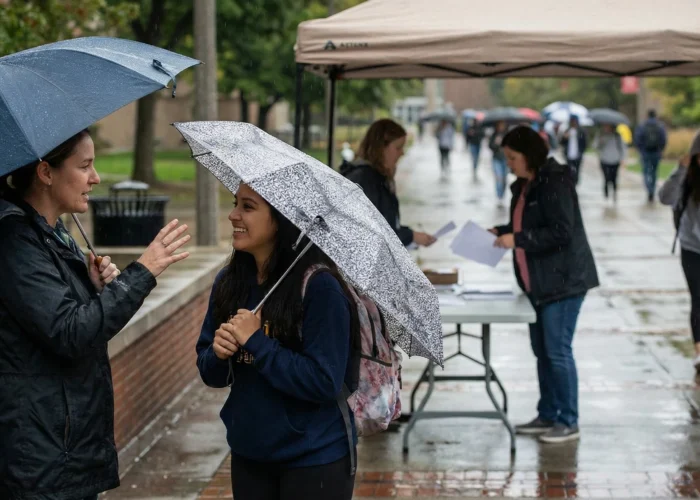
Outdoor activations come with variables that can affect turnout and experience quality.
- Plan for shade in hot conditions
- Secure materials against the wind
- Prepare for rain with protective setups
- Always have an indoor backup location
A small adjustment in location or setup can significantly improve participation. Student activations work best when placement, timing, and staffing are aligned with real campus conditions.
Subscribe To Our NewsLetter
We help you to elevate your events with our highly skilled professionals. You got these three simple steps to book our service
Staffing Activities for Students and How to Prevent Long Lines
Long lines are not random. In student activations, they signal that something in the flow is slowing down. If not addressed quickly, lines reduce participation instead of increasing it.
The solution is not just adding more people. It is designing a clear flow first, then aligning staffing activities for students to support that flow.
The 4-Step Student Activation Flow Model
- Attract—A greeter captures attention with a clear and quick hook
- Engage—The student participates in a short, structured interaction
- Convert —A single action, such as sampling, scanning, or signing up
- Exit — A clean finish so the next student can step in immediately
Each step should move smoothly into the next without delay.
Where Long Lines Usually Start
In most student activations, bottlenecks appear in predictable places:
- Students pause because the experience is not immediately clear
- Staff explain too much before engagement begins
- Interactions take longer than expected
- Stations are slow to reset
- No one manages the queue during peak traffic
Once 5 to 6 people are waiting, new students often choose not to join. The activation may look busy, but actual participation drops. With 46% of event attendees spending 15–30 minutes engaging with exhibits at trade shows, the risk of over-engineering your interaction time on campus, where students have far less patience, is real.
How Staffing Activities for Students Prevent Bottlenecks
Well-structured staffing activities for students keep each stage of the flow moving independently:
- Greeters explain just enough to bring students in
- Station leads focus only on the interaction
- Capture support handles data collection separately
- The queue support sets expectations before students enter
A simple line like “This takes 30 seconds” can reduce hesitation and keep the flow steady.
Reset Rhythm Rule
Every station should reset in under 15 to 20 seconds
If reset time increases:
- The system slows down
- Lines form quickly
- Staff become overloaded
- Participation declines
Designing for fast reset and aligning staffing activities for students around that rhythm ensures the activation holds up during peak campus traffic.
Student Activations Scripts That Keep Messaging Consistent
Student activations perform best when every interaction feels clear, quick, and consistent. On a busy campus, students should hear the same message no matter which staff member they approach.
Without structure, messaging starts to drift. Some staff explain too much, others skip key points, and the experience becomes uneven. Simple scripting keeps everything aligned without making interactions feel robotic.
A Simple 3-Part Script That Works
Part | What to Say and Why |
Hook | “Want to try this in under a minute?” — A quick, curiosity-driven opener that stops students without overwhelming them |
Proof | “This shows you how it works right away.” — Focus on the outcome, not features |
CTA | “Scan here to get yours”—one clear action with no alternatives |
This structure keeps the interaction short and easy to follow. It also aligns directly with the traits that make a successful brand ambassador in 2026 brevity, clarity, and confident delivery.
Why Consistency Matters in Student Activations
- Students decide quickly whether to engage or walk away
- Mixed messaging creates hesitation
- Longer explanations slow down the flow
When messaging is consistent, participation becomes predictable and easier to scale. EAB’s 2024 student engagement research found that 69% of students trust peer voices over brand-direct communication, which means your staff’s delivery, not just your creative, is what students are actually responding to.
How Staffing Activities for Students Support Messaging
Structured staffing activities for students ensure that communication stays aligned:
- Greeters deliver the hook in the same way every time
- Station leads reinforce the key message during the interaction
- Capture support focuses only on the final action
This separation keeps conversations short and prevents overload.
Where Teams Usually Drift
As the day progresses, small issues start to affect performance:
- Staff begin to over-explain before engagement
- Different team members use different wording
- Multiple CTAs are introduced during conversations
How to Keep Messaging on Track
- Start with a quick team briefing before the activation begins
- Run mid-shift check-ins to correct drift early
- Share what is working and simplify what is not
When messaging stays consistent, student activations feel easy to join and quick to complete. That clarity is what keeps engagement high across the entire day.
Staffing Activities for Students and Day-of Setup Checklist
Student activations run smoothly when everything is prepared before the first student arrives. Small setup gaps can quickly turn into delays, confusion, and lost engagement during peak traffic.
A clear setup process ensures that staffing activities for students start strong and stay consistent throughout the day.
Day-of Setup Checklist
- ☐ Footprint confirmed, and layout supports the planned flow, not just the available space
- ☐ Entry and queue clearly marked so students know where to go
- ☐ Power and Wi-Fi tested on-site and working reliably
- ☐ Offline backup ready in case QR or network fails
- ☐ Roles assigned clearly and understood by every team member
- ☐ Break coverage planned to avoid gaps during peak traffic
- ☐ Inventory stocked and organized for quick access and restocking
- ☐ Measurement owner assigned to track performance consistently
- ☐ Escalation plan defined so issues are resolved quickly
Why Setup Impacts Performance
Even well-designed student activations can fail if the setup is incomplete or unclear.
Common issues include:
- Confusing entry points that slow down participation
- Missing backups that stop the experience during technical issues
- Unclear roles that lead to overlap and delays
How Staffing Activities for Students Support Setup
Strong staffing activities for students ensure that the setup translates into smooth execution:
- Team leads confirm layout and flow before starting
- Greeters test entry points and initial messaging
- Station leads check timing and reset speed
- Floaters prepare inventory and support quick fixes
When setup is handled properly, the activation starts smoothly and continues without disruption. This consistency is what allows student activations to perform reliably under real campus conditions.
Student Activations Measurement That Stays Simple
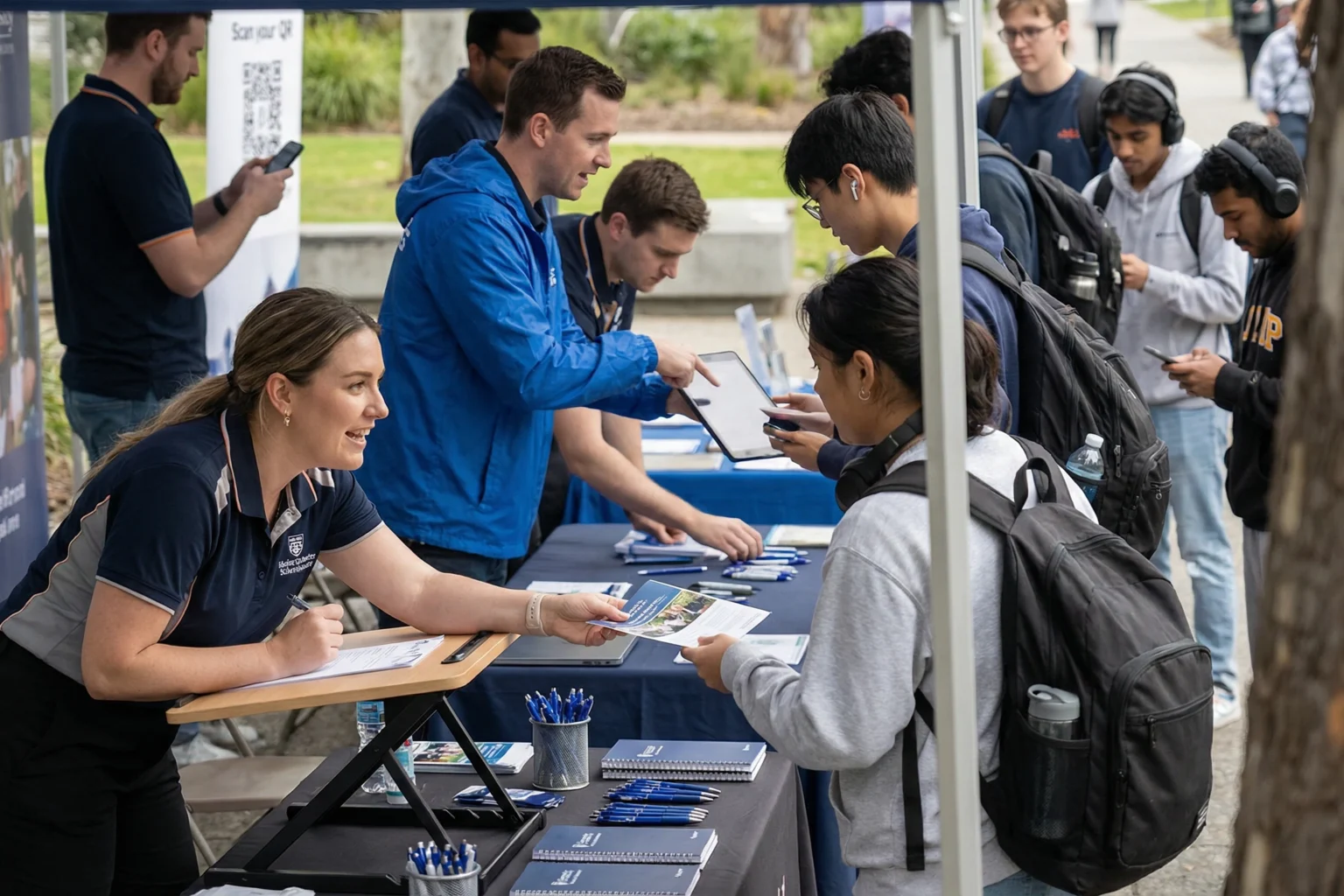
Measurement should support the activation, not slow it down. On campus, speed matters. If tracking becomes complicated, it disrupts flow and reduces participation.
The most effective student activations track a few key metrics that clearly reflect performance. Keep it simple, consistent, and easy to capture in real time.
Simple Student Activation Scorecard
Metric | What It Tells You |
Total interactions | Number of students who started the experience |
Conversion rate | Percentage of students who completed the action such as sampling, scanning, or sign-up |
Peak hour performance | How the activation performs during high-traffic periods |
Issues observed | What slowed down or broke during execution |
This approach mirrors the KPI framework we use for measuring brand activation success, a few well-chosen metrics consistently outperform long reporting lists when execution is happening in real time.
What Good Performance Looks Like
- Steady interaction volume across peak windows
- Consistent conversion rates without major drops
- Smooth flow with minimal queue buildup
- No major breakdowns in staffing or setup
Patterns to Watch During Student Activations
- High traffic but low engagement → The setup or message is unclear
- High sign-ups but low quality → Capture is rushed or poorly explained
- Strong early performance but drop later → Staffing fatigue or message drift
How Staffing Activities for Students Support Measurement
Measurement works best when one person owns it. This keeps the rest of the team focused on execution.
- Assign a dedicated measurement owner
- Keep data capture separate from the main interaction
- Use simple tools that do not interrupt flow
Well-structured staffing activities for students ensure that tracking happens in the background while the activation continues to run smoothly.
When measurement is simple and aligned with your goal, it becomes a tool for improvement, not a barrier to performance.
Student Activations Examples That Show What Works
The best way to understand what works in student activations is to look at formats that perform consistently under real campus conditions. When format, flow, and staffing activities for students align, the activation remains smooth even during peak traffic.
Example 1: Demo-First Activation
Setup
- Located between two lecture halls with constant foot traffic
- Three demo stations running the same loop
- Team structure: 1 greeter, 3 station leads, 1 floater
What Made It Work
- Clear start and finish for every interaction
- Fast reset between participants
- Floater ensured stations never paused
Result
- High throughput during peak windows
- No visible line buildup
Example 2: Lead Capture Activation
Setup
- QR-based sign-up with assisted capture
- One short interaction before requesting details
- Dedicated capture support role
What Made It Work
- Data capture did not interrupt the main experience
- Staff guided students quickly through the process
- No bottleneck at the sign-up stage
Result
- Higher-quality sign-ups
- Minimal drop-off during peak traffic
Example 3: Sampling Activation
Setup
- Single product with one clear use case
- Fast handoff with a one-line explanation
- Floater focused on restocking and reset
What Made It Work
- One consistent message across all staff
- Quick distribution kept the flow moving
- Reset time stayed under 15 seconds
Result
- Maximum reach during high-traffic periods
- Consistent participation throughout the day
Key Takeaway Across All Examples
Across these student activations, the pattern is consistent:
- The format is simple and repeatable
- The interaction is quick and clearly defined
- Staffing activities for students are structured and role-based
- Flow is maintained even when traffic increases
For a deeper look at how some of the world’s most effective teams approach this execution challenge at scale, our post on how to track promotional and brand ambassador agency staffing success breaks down the metrics and team behaviors that separate consistent performers from one-hit activations.
When these elements come together, student activations do not just attract attention. They sustain participation and deliver measurable results.
When to Bring in a Professional Staffing Agency
Student activations often start simple, but complexity increases quickly as you scale across campuses, timelines, and audience volumes. What works for one location can break when applied across multiple sites without the right structure.
For brands running larger campaigns, consistency becomes the biggest challenge. Not creativity, but execution.
Global experiential marketing spend reached an estimated $128.35 billion by the end of 2024, surpassing pre-pandemic highs, and 74% of Fortune 1000 marketers plan to increase their experiential marketing budgets in 2025 and 2026. As budgets grow, so do the operational demands placed on on-the-ground teams.
When Student Activations Start to Break
As campaigns scale, common issues begin to appear:
- Multiple campuses with tight timelines
- Inconsistent staff performance across locations
- Last-minute dropouts affecting coverage
- Messaging differences between teams
- Lack of coordination during peak traffic
These issues reduce performance even when the activation concept is strong. The same challenge applies at scale in multi-city campaigns, something we address directly in our guide on how event team leaders coordinate multi-city event staffing.
What Changes with Professional Staffing Support
Situation | What Improves with Agency Support |
Multi-campus rollout | Pre-trained teams ensure consistent execution without long onboarding time |
Inconsistent staff quality | Structured vetting improves reliability and communication |
Last-minute gaps | Backup staff availability prevents disruption |
Messaging alignment | Standardized training ensures consistent delivery across teams |
Why This Matters for Performance
Student activations depend on repetition and consistency. Every interaction should feel the same, whether it is the first student of the day or the hundredth.
Professional staffing support helps:
- Maintain consistent messaging across all locations
- Keep staffing activities for students structured and reliable
- Reduce operational risks during high-traffic periods
When It Makes Sense to Scale with Support
You should consider external support when:
- You are running activations across multiple campuses
- Your campaign requires high daily throughput
- Brand consistency is critical across locations
- Internal teams cannot manage staffing complexity
Student activations succeed when execution holds up under pressure. The right staffing structure ensures that performance stays consistent, even as scale increases.
Is Your Student Activation Built to Hold Up When It Actually Matters?
Student activations work best when they are built for real campus conditions, not ideal scenarios. The difference between strong performance and early drop-off comes down to how well your activation handles speed, clarity, and consistency.
It is easy to design something that looks engaging. It is harder to run something that performs during peak traffic, when lines build, staff rotate, and every interaction needs to stay consistent.
Event ROI typically ranges between 25–34% for well-executed campaigns, but that range only holds when staffing and flow are structured correctly from the start.
What High-Performing Student Activations Get Right
- The experience is easy to understand within seconds
- The interaction is quick and structured
- Staffing activities for students are clearly defined and role-based
- Flow is maintained even during high-traffic windows
Where Most Activations Fall Short
- Too much explanation before engagement
- Unclear next steps for students
- Poorly defined roles leading to delays
- Inconsistent delivery across staff members
These gaps reduce participation, even in high-traffic locations.
How to Build for Real Campus Conditions
To make student activations work consistently:
- Plan around student movement and peak timing
- Keep formats simple and repeatable
- Define staffing activities for students before execution
- Focus on flow, not just setup
When these elements are aligned, your activation does more than attract attention. It sustains engagement and delivers measurable results.
FAQs
What are student activations in campus marketing?
Student activations are interactive brand experiences designed to engage students directly on campus. They focus on quick participation, clear messaging, and high visibility in busy areas such as walkways, lecture halls, and student hubs. They work best when supported by structured staffing activities for students that ensure smooth flow, fast interaction times, and consistent delivery during peak traffic. If you are planning a campus-based brand experience, our brand ambassador staffing services are built specifically to support this kind of high-volume, fast-paced engagement.
Which staffing activities for students matter most during peak foot traffic?
The most critical roles are greeters to attract and direct students quickly, station leads to manage the interaction consistently, and floaters to reset stations and handle support tasks. These roles keep the activation moving without delays. During high-traffic periods, adding queue support helps manage expectations and prevent bottlenecks. Premier Staff’s promotional and experiential staffing teams are trained specifically for high-throughput, fast-rotation environments like campus activations.
How do I prevent long lines during student activations?
Start by designing a clear flow instead of adding more staff. Keep interactions short and structured, define each step clearly from entry to exit, ensure stations reset within 15 to 20 seconds, and assign roles so no one handles multiple tasks. Staffing activities for students should support each stage of the flow to keep participation steady. Our street team staffing services are structured around exactly this kind of role clarity, fast-moving, high-volume environments where flow design is everything.
What is the simplest student activation format for a small team?
Sampling with one clear use case is the easiest format to execute: one product, one message, one quick interaction. This format reduces explanation time and scales well during peak traffic. With the right staffing activities for students, even a small team can maintain a consistent flow. Our booth staffing services are well-suited to this format, designed for small-team deployments that still need to deliver a professional, consistent brand experience.
How should I measure student activations without slowing participation?
Focus on a few key metrics: total interactions, conversion rate, and peak hour performance. Assign one person to track performance so the rest of the team can focus on execution. Keep measurement simple to avoid interrupting the experience. Our brand activation staffing teams include dedicated team leads who handle real-time performance tracking without pulling focus from the student-facing roles.
Ready to Run a High-Performing Student Activation?
If you are planning a campus campaign, the difference between a strong turnout and missed opportunity comes down to execution. We help brands design student activations that handle peak campus traffic without breaking, maintain consistent messaging across teams, and convert attention into measurable results.
👉 Get a tailored staffing and activation plan built for your campus, audience, and campaign goals.
Are You Ready to Elevate Your Event?
Don’t wait—book Premier Staff now to secure top-tier professionals for your next event.
Recommended Posts



An event brand ambassador is the person who represents your brand to guests from setup to wrap-up. Before your event,...