
- Event Team Leader Job Description Explained for First-Time Applicants

Event team leader job description sounds straightforward until you’re on-site and three things happen at once: a vendor’s late, a staffer’s missing, and someone’s asking who approved the new line setup.
So, here’s the real answer to the title question. You’ll be the on-the-ground lead who keeps staff moving, fixes small problems before they turn public, and escalates the right issues fast, without freezing up.
If you’re a first-time event team leader, that’s the part you’re probably wondering about. What will you actually be doing, minute to minute, and do you have the event management skills to pull it off?
You will, if you understand the rhythm of the job:
- You run staff zones and assignments
- You keep vendor touchpoints clean
- You track timing like it’s a live scoreboard
- You support event supervisor duties by keeping your area stable, documented, and calm
This guide breaks down the role in plain language, with the real patterns you’ll see on event day, so you can step into event leadership roles with confidence.
Executive Summary
Event success depends on disciplined leadership, structured staffing, and precise execution. An experienced team protects timelines, safeguards brand reputation, and ensures seamless guest flow under pressure. Investing in operational control is the most reliable way to deliver consistent, high-impact event outcomes.
Operational excellence is a leadership decision, not a coincidence. When you invest in structured staffing and experienced professionals, you protect brand equity, timelines, and client trust. In live events, precision execution is what separates average service from a lasting reputation.
— Daniel Meursing, CEO of Premier Staff
The event team leader job description covers live execution leadership. It focuses on supervising staff, coordinating vendors, maintaining compliance, and protecting timelines during an event.
In simple terms, planning happens before doors open. Execution begins once guests arrive. The event team leader operates inside that execution window.
Core Areas of Responsibility
An event team leader is typically responsible for:
- Supervising assigned staff within a defined zone
- Adjusting staff placement based on traffic flow
- Coordinating with vendors when schedules shift
- Monitoring guest experience in real time
- Escalating issues that fall under the event supervisor’s duties
- Documenting incidents and operational observations
The role is not about perfection. It is about stability. Small gaps in supervision often turn into visible delays. Strong event management skills prevent those gaps from forming.
What This Means in Practice
A formal job description may reference:
- Staff supervision
- Vendor coordination
- Timeline management
- Compliance oversight
- Communication reporting
On-site, those responsibilities overlap constantly. You may be:
- Reassigning a greeter due to a line buildup
- Confirming a vendor load-in adjustment
- Monitoring radio communication for escalation signals
- Ensuring break rotations do not disrupt coverage
The event team leader job description is designed to protect operational flow. When the zone runs cleanly, supervisors can focus on broader oversight instead of firefighting avoidable issues.
For a first-time event team leader, understanding this structure is the foundation for stepping confidently into event leadership roles.
What Does an Event Team Leader Do on Event Day?
An event team leader directs live execution. You manage people, timing, and communication in real time so the guest experience remains consistent and controlled.
If you are reviewing the event team leader job description as a first-time applicant, this is what the role looks like minute by minute.
Before Doors Open
Preparation determines how stable your zone will be later.
Key responsibilities include:
- Confirming staff call times and attendance
- Reviewing zone assignments and backup coverage
- Testing radios and communication channels
- Walking the space to verify layout and signage
- Aligning with vendors on timing checkpoints
A short, structured team briefing sets the tone. Clarify roles, peak traffic windows, and escalation paths. Strong event management skills begin with clear expectations.
During Live Execution
Once guests arrive, your focus shifts to active oversight.
On event day, an event team leader typically:
- Monitors guest flow and adjusts staff placement
- Handles first-line issues before escalation
- Coordinates with vendors if schedules shift
- Protects break rotations to prevent fatigue
- Tracks timing against the run of show
At larger conferences or trade shows, one event team leader may supervise between 8 and 25 staff members, depending on zone size and complexity. That span of control requires structured delegation. Too many direct reports without clear systems creates drift. Too few waste leadership capacity.
When Issues Surface
Execution rarely follows the plan perfectly. Your role is to reduce visibility of disruption.
When a cue is missed:
- Staff look for direction
- Vendors may improvise
- Guest flow slows
- Pressure increases quickly
The event team leader absorbs that pressure at the zone level. You solve what you can immediately. You escalate what exceeds your authority. You document what matters.
For a first-time event team leader, the win condition is simple:
- Keep your zone stable
- Communicate clearly
- Escalate early
- Do not let small issues age
That is how the event team leader job description translates into real operational control.
Daily Workflow of an Event Team Leader
It reads cleanly on paper. On event day, it unfolds in phases.
Phase 1: Load-In and Setup
- Walk the venue and confirm layouts
- Verify credential lists, especially in union venues
- Confirm vendor arrival windows
- Test communication devices
This is where most small errors surface early.
Phase 2: Pre-Event Briefing
- Assign zones and backup coverage
- Review high-traffic windows
- Clarify escalation chain
- Reinforce documentation standards
Strong briefings reduce mid-event confusion, similar to how brand activation campaigns require clear role alignment before launch.
Phase 3: Live Execution
- Monitor guest flow and adjust staff placement
- Coordinate vendor timing
- Handle first-line issues before escalation
- Protect break rotations to prevent fatigue
Here’s where event management skills show up clearly.
Phase 4: Close-Out
- Debrief team
- Collect incident notes
- Report key observations to supervisors
- Flag workflow improvements
Execution ends, but documentation matters. It supports event supervisor duties and protects operational continuity.
Why Do Event Team Leaders Matter More in 2026?
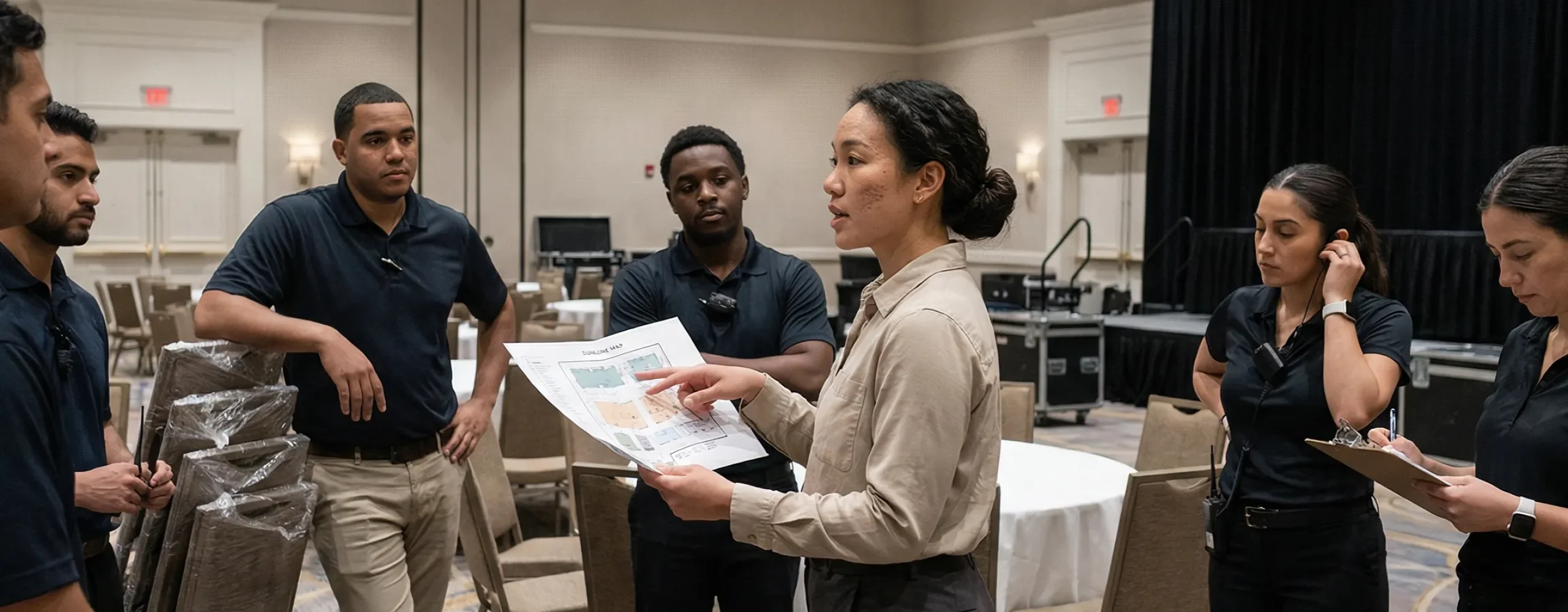
In 2026, tighter labor markets and higher costs mean event team leaders keep lean crews coordinated, compliant, and on schedule under real pressure.
Staffing budgets haven’t grown at the same pace as expectations. Labor cost bands are up in most major cities, often 8 to 12 percent higher than a few years ago. That changes how events are staffed. Fewer floaters. Leaner zone coverage. Less room for error.
When a cue gets missed, here’s what usually happens:
- Staff pause and wait for direction
- Vendors improvise without alignment
- Guest flow slows, then complaints follow
Post-2023, attendees are less patient. Registration lines over five minutes trigger frustration quickly, especially at corporate conferences and trade shows.
Strong event leadership roles absorb that pressure. Your decisions protect timing, protect compliance, and support upstream event supervisor duties without drama.
What Are the Core Responsibilities in an Event Team Leader Job Description?
The event team leader job description centers on five responsibility pillars: team management, operations oversight, communication control, preparation, and post-event reporting.
On paper, these categories look structured. On-site, they overlap constantly. A skilled event team leader manages all five without losing clarity.
1. Team Management
Supervising staff is the most visible part of the role.
Core team responsibilities include:
- Assigning staff to zones based on pace and experience
- Adjusting placements when traffic patterns shift
- Monitoring performance and correcting drift early
- Protecting break rotations to prevent fatigue
- Reinforcing service standards under pressure
Event management skills are most visible in how you deploy people. Smart delegation reduces friction and keeps guest flow stable.
2. Operations Oversight
Operations control protects timing and structure.
An event team leader is responsible for:
- Coordinating vendor arrivals and load-in timing
- Confirming session or stage transitions
- Monitoring access control and credentialing
- Ensuring compliance with venue rules
- Verifying equipment and communication readiness
Strong execution prevents small coordination gaps from becoming visible delays.
3. Communication Control
Clear communication separates stable zones from chaotic ones.
Communication responsibilities include:
- Relaying updates to supervisors accurately
- Confirming instructions over the radio or headset
- Escalating issues that exceed authority
- Documenting incidents objectively
Event supervisor duties often depend on the accuracy of information provided by event team leaders. Clean reporting builds trust and credibility.
4. Planning and Preparation
Although execution is the primary focus, preparation is critical.
Before doors open, an event team leader should:
- Review zone maps and staffing ratios
- Confirm escalation hierarchy
- Run structured pre-event briefings
- Anticipate high-traffic windows
Prepared leaders react faster because they have already mapped risk points.
5. Post-Event Duties
Close-out responsibilities protect long-term improvement.
Post-event tasks typically include:
- Conducting team debriefs
- Submitting performance and incident notes
- Flagging workflow inefficiencies
- Recommending staffing adjustments for future events
For a first-time event team leader, understanding these five pillars transforms the event team leader job description from abstract language into an actionable structure.
Subscribe To Our NewsLetter
We help you to elevate your events with our highly skilled professionals. You got these three simple steps to book our service
Event Team Leader Responsibilities by Event Size
The event team leader job description shifts depending on event scale. Your span of control, stress load, and documentation needs all expand with size.
Event Type | Typical Staff Supervised | Primary Focus | Operational Risk Level |
Small Brand Activation | 5–8 staff | Guest engagement, check-in flow | Low to Moderate |
Mid-Size Corporate Event | 8–15 staff | Zone coordination, vendor timing | Moderate |
Large Conference or Trade Show | 15–25+ staff | Multi-zone supervision, escalation management | High |
At smaller events, you’re visible everywhere. At larger conferences, you’re managing systems, not just people.
Understanding this context helps first-time event team leaders choose assignments that match their experience level. Starting with tighter teams builds confidence before stepping into broader event leadership roles.
What Event Management Skills Does a First-Time Event Team Leader Need?
A first-time event team leader needs clear communication, smart delegation, real-time problem solving, and strong event management skills to keep zones moving.
Let’s make it practical. If you can do these things consistently, you’ll be fine.
Leadership and Delegation
You’re not doing every task. You’re placing people where they’ll win.
- Assign roles based on pace and personality
- Move staff when lines spike
- Call out priorities, then let them execute
Communication Under Pressure
Short instructions beat long speeches.
- Use simple phrasing
- Confirm understanding
- Keep radio chatter clean
Real-Time Problem Solving
Stuff breaks. Your job is to stop it from spreading.
- Vendor late, adjust workflow
- Check-in slow, add support
- Missing supplies, reroute quickly
Time Management
Minute-level slips compound.
- Track transitions
- Watch session timing
- Protect breaks so the team stays sharp
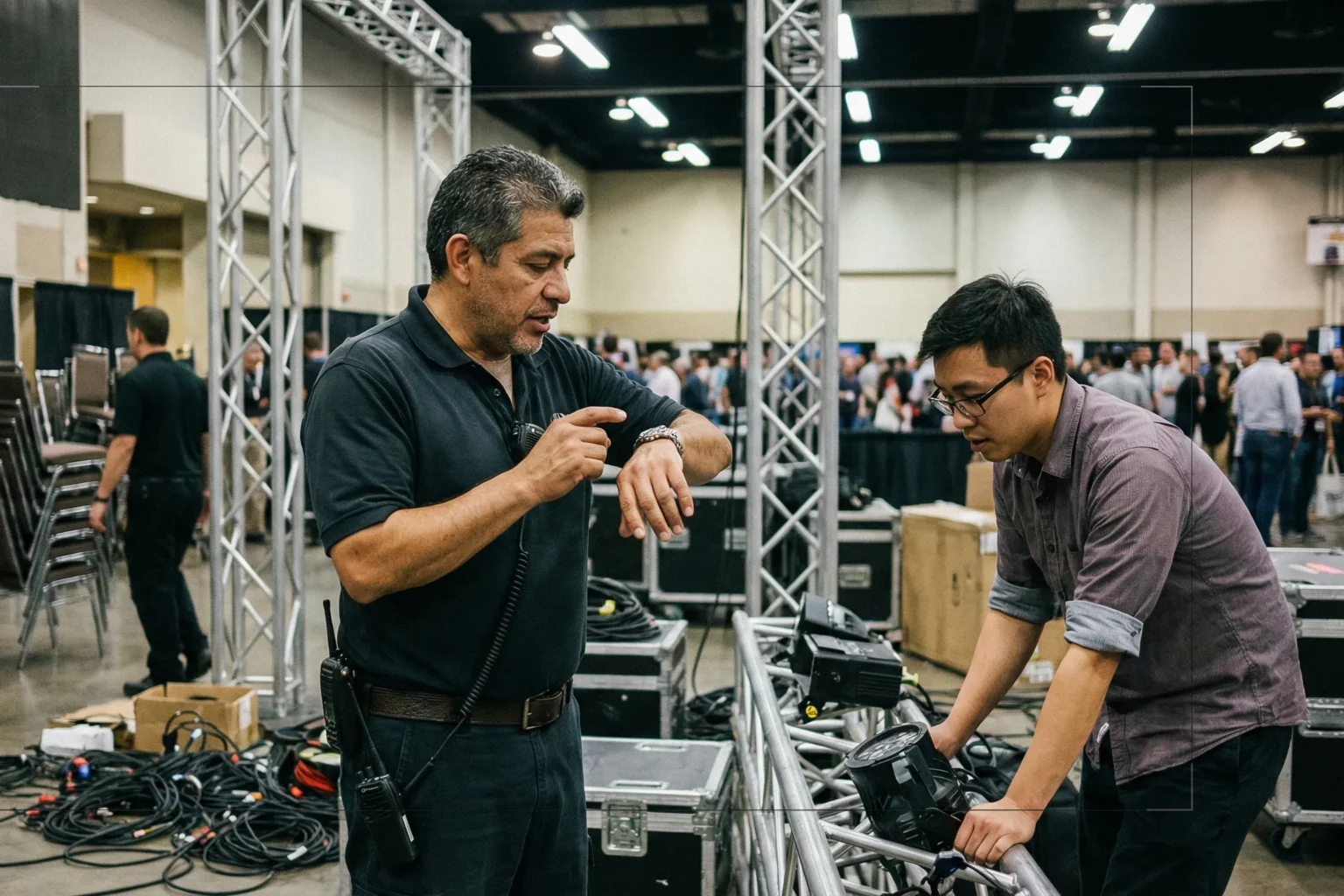
With recent industry surveys revealing that 53% of event professionals report rising levels of burnout and stress due to tight deadlines, protecting your team’s energy is an operational necessity. A schedule might look perfect on paper, but you still have to read fatigue, monitor guest flow, and adjust rotations based on the reality on the floor. That human judgment is the most critical part of event leadership roles today.
How Is an Event Team Leader Different From an Event Supervisor or Coordinator?
Understanding hierarchy is essential when reviewing an event team leader job description. Each role supports execution, but authority and scope differ.
If you are stepping into event leadership roles for the first time, clarity about structure protects you from overreach and confusion.
Event Coordinator
An event coordinator typically focuses on pre-event logistics.
Primary responsibilities include:
- Confirming vendors and contracts
- Building timelines and run-of-show documents
- Managing planning communication
- Finalizing staffing requests
Coordinators may not supervise frontline staff during live execution. Their work happens primarily before doors open.
Event Team Leader
An event team leader operates inside live execution.
Core responsibilities include:
- Supervising a defined zone or operational segment
- Directing 5 to 25 staff depending on scale
- Managing first-level issues
- Documenting incidents and observations
- Escalating issues that fall under event supervisor duties
The event team leader job description sits at the operational center of the event. You protect your zone so supervisors can maintain site-wide stability.
Event Supervisor
Event supervisors oversee multiple team leaders and broader operations.
Typical event supervisor duties include:
- Managing multiple zones or departments
- Approving escalations that exceed team leader authority
- Overseeing compliance and risk exposure
- Making final decisions on operational adjustments
Supervisors focus on macro-level control. Team leaders focus on micro-level execution.
Where a First-Time Event Team Leader Fits
As a first-time event team leader, your authority sits in the middle layer.
You:
- Solve localized issues
- Escalate structural problems
- Maintain documentation
- Protect your assigned zone
A clear understanding of this hierarchy strengthens performance and positions you for advancement into broader event leadership roles.
How Do You Prepare for Your First-Time Event Team Leader Shift?
Preparation is what turns the event team leader job description into confident execution. A first-time event team leader succeeds by building structure before pressure rises.
Strong event management skills begin before load-in.
Before Load-In
Preparation should focus on clarity and alignment.
Review and confirm:
- Run-of-show and session timing
- Zone assignments and staffing counts
- Call times and arrival expectations
- Escalation hierarchy and supervisor contacts
- Venue compliance requirements
Knowing reporting lines protects you from hesitation when issues surface.
During Load-In
Load-in is your opportunity to verify assumptions.
An event team leader should:
- Walk the venue and confirm layout accuracy
- Check credential access points
- Verify vendor arrival timing
- Test communication devices
- Identify potential traffic bottlenecks
In union-regulated venues, workflow rules may affect staging and movement. Early verification prevents mid-event disruption.
Pre-Event Briefing
A short, structured briefing creates stability.
Your briefing should include:
- Clear zone assignments
- High-traffic window awareness
- Escalation expectations
- Break rotation structure
- Documentation standards
According to workforce reporting from the U.S. Bureau of Labor Statistics, labor costs continue to rise across service sectors. Lean staffing models make pre-event clarity even more critical.
Sustainability and Compliance Awareness
In 2026, many venues require sustainability compliance and waste separation protocols. Event leadership roles now include monitoring adherence to these standards.
Understanding these requirements supports broader event supervisor duties and protects the event from penalties or client dissatisfaction.
For a first-time event team leader, preparation reduces uncertainty. When the doors open, your focus shifts from reacting to executing with control.
First-Day Checklist for a First-Time Event Team Leader
If you’re stepping into your first shift, keep it simple and structured.
Before Arrival
- Review run-of-show
- Confirm call times
- Understand reporting hierarchy
Upon Arrival
- Walk the venue
- Introduce yourself to vendors
- Confirm communication tools
Before Doors Open
- Run a short, clear team briefing
- Confirm zone assignments
- Identify peak traffic windows
During Event
- Watch for early bottlenecks
- Rotate staff before fatigue shows
- Document anything unusual
After Event
- Conduct a quick debrief
- Submit clean notes
- Reflect on what worked
Preparation turns the event team leader job description into practical execution. That’s what separates nervous first-timers from confident operators. Understanding event staffing costs also helps you appreciate the financial stakes of efficient leadership.
What Is the Typical Pay for an Event Team Leader in 2026?
Events are running leaner in 2026; the financial value of reliable on-site leadership has spiked. Event team leaders typically command a 25% to 40% wage premium over standard event staff, with hourly rates in major markets often ranging from $25 to over $35 depending on location, union conditions, and event complexity.
Here’s what moves the range up or down:
Factors That Increase Pay
- Union venues with stricter access and workflow rules
- Multi-day conferences with a heavier coordination load
- High-visibility corporate events with tighter timelines
- Larger teams, where supervision spans increase pressure
Factors That Keep Pay Lower
- Short shifts with limited operational scope
- Smaller activations with fewer staff and vendors
- Roles where responsibilities lean more toward support than oversight
If you’re stepping into event leadership roles, pay is only part of the decision. The better question is: will this shift grow your event management skills, and will you get exposure to real event supervisor duties through escalation and reporting?
The same principles that drive bartender compensation structures, apply here, experience, venue complexity, and service quality all influence rates.
FAQs
Can I become an event team leader with no experience?
Yes, but most postings want 1-2 years in staffing or guest services, think ushering, bartending under pressure, or coordinating volunteers. Highlight transferable skills like delegation during busy shifts or handling escalations. First-time event team leaders shine by prepping: review run-of-show, practice briefings. In 2026’s tight labor market, agencies train motivated newcomers fast if you show real-time problem-solving grit. Professional event staffing services can accelerate your development.
What does a first day as event team leader really look like?
Arrive early for load-in walkthroughs, confirm zones/staff call times, run a 10-minute briefing on roles and escalations. During execution: adjust for traffic spikes, coordinate late vendors, monitor breaks to fight fatigue, escalate via radio. Handle guest flow without freezing, small fixes first. End with debrief/notes. It’s 70% people-wrangling, 30% ops in loud chaos; strong communication keeps your zone stable. Trade show staffing environments particularly demand this execution discipline.
What key skills do event team leaders need most?
Core event management skills: clear delegation (assign zones by strengths), pressure communication (short radio calls), quick fixes (reroute for vendor delays), time tracking (session transitions). Read crowd flow, spot fatigue, and enforce compliance. 2026 tools, such as AI schedulers, help, but floor judgment rules. First-timers build this via practice, volunteer at local events to prove you stay calm when three issues hit simultaneously. Brand ambassador programs offer great skill-building opportunities.
How many people does an event team leader usually supervise?
Typically 8-25 staff, based on zone size and 2026 lean staffing (up 8-12% costs mean fewer floaters). Small activations: 5-10 for check-ins. Large conferences/trade shows: 15-25 across greeters/ops. Too many lose oversight; too few waste leadership. Success metric: stable flow without drama. Agencies match you to span, start small as a first-time event team leader to build confidence. Promotional event staffing typically requires managing mid-size teams.
Event team leader vs. supervisor: what's the difference?
Team leaders run one zone’s frontline execution (staff direction, vendor sync, issues), supervising 8-25. Supervisors oversee multiple leaders site-wide, handling big escalations/budgets. Coordinators plan pre-event logistics. As a first-timer in event leadership roles, you’re middle-tier: solve locally, report up. This structure scales for 2026 high-stakes events, know your lane to avoid overreach and shine in interviews. Convention staffing operations clearly illustrate these hierarchies.
What's the 2026 pay for event team leaders, and how to negotiate?
$22-35/hour in major U.S. markets, higher ($30+) for unions, multi-day conferences, or high-visibility gigs. Factors: team size, risk (crowd control), location. Negotiate by citing experience, certifications (OSHA/CPR), or past escalations handled. Ask about perks like overtime or future supervisor paths. Understanding bartending cost structures helps contextualize event staffing economics when negotiating rates.
Operational Confidence Is the Real Qualification
The event team leader job description is not just a list of tasks. It is a responsibility framework. You supervise people, protect timing, manage vendor touchpoints, and support event supervisor duties without creating noise.
For a first-time event team leader, success does not come from knowing everything. It comes from staying structured when pressure rises. You keep zones stable. You communicate clearly. You escalate early instead of late.
As event leadership roles evolve in 2026 with leaner crews, tighter budgets, and AI-assisted scheduling, judgment matters more than ever. Strong event management skills are what turn unpredictability into controlled execution.
If you understand the rhythm, the hierarchy, and the flow of the floor, you are already closer than you think. When you are ready to step into a leadership assignment or explore staffing opportunities, you can Get a Quote to connect with an experienced event staffing team and take the next step forward.
Are You Ready to Elevate Your Event?
Don’t wait—book Premier Staff now to secure top-tier professionals for your next event.
Recommended Posts



An event brand ambassador is the person who represents your brand to guests from setup to wrap-up. Before your event,...