- What Is a Gala Event? 5 Formats, Real Costs and the Staff You Need
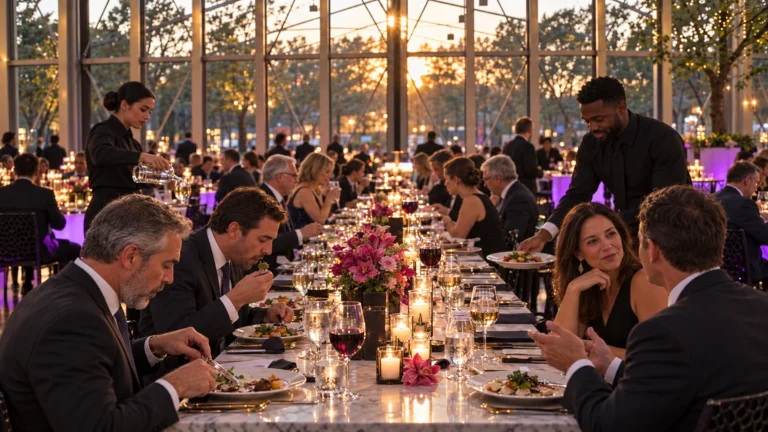
A gala event is a formal evening built around a seated dinner, a program of speeches, awards or an auction, and usually a cause. Hosts use one to raise money, honor people or mark a milestone, and guests come dressed in black tie or close to it.
Charity galas carry a lot of America’s giving. Donors gave $617.2 billion in 2025, the first year totals passed $600 billion, according to Giving USA 2026. Below you’ll find the 5 formats hosts choose from, what a gala event really costs and the staff who keep the night on schedule.
Quick Summary for a Gala Event
- What is a gala event in one line? It’s a formal night with dinner, a program and usually a cause, and the main types of galas are charity, corporate, performance, ball, private and holiday galas.
- A charity gala typically spends about 50 cents for every dollar it raises, so set a hard budget before the invitations go out.
- Plan one server for every 10 guests when dinner overlaps a live program, and staff the arrival wave and coat check as their own jobs.
Guests remember two moments at a gala. They remember how quickly they got through the door, and they remember whether dinner landed on time between the speeches. Staff those two moments first, then build out the rest of the floor around them.
— Daniel Meursing, CEO of Premier Staff
What Are the Different Types of Galas?
So what is a gala in practice? Most types of galas share the same bones, with a reception, a seated dinner, a program and dancing or a send-off. The purpose changes everything else, from the run of show to the dress code and the number of people you need on the floor. Here are the 5 formats you’ll see most, plus the seasonal one that fills December calendars.
Charity gala dinner
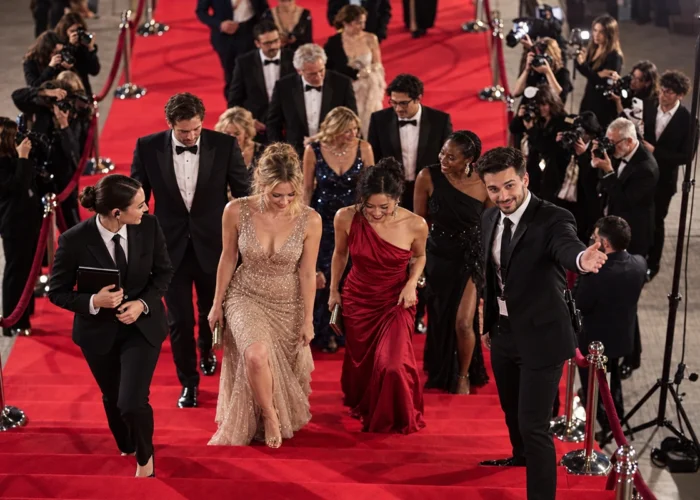
A charity gala raises money for a nonprofit through ticket sales, sponsor tables and giving moments during dinner. New York’s Met Gala is the famous version, with single tickets at $100,000 this year, per AP.
- Giving moments include a live auction, a silent auction and a paddle raise right after the mission video.
- Guests usually sit at sponsor tables of 10, so the seating plan matters more than at most dinners.
- You’ll need floor staff to hand out bid paddles and help the auctioneer spot raised hands.
Corporate gala and awards night
A corporate gala event thanks clients, celebrates employees or hands out industry awards. The company pays the bill, so the focus moves from fundraising to brand image, clean stage moments and careful VIP attention.
- Awards segments need someone backstage lining up each winner before their name is called.
- Head tables for executives and key clients get served first, and everyone in the room notices when they don’t.
- Branded check-in and printed name badges set the tone the moment guests walk through the door.
Performance gala
A performance gala wraps dinner around a concert, opera or ballet. Chicago’s Lyric Opening Gala is a good model, with a 2024 schedule of a 6 p.m. reception, a 7 p.m. concert and dinner at 9:30.
- Guests change rooms at least twice, so ushers and directional staff carry more of the evening.
- Dinner starts late, which means servers need a tight plated rhythm and a quick clear afterward.
- An intermission reception adds a second short service window you’ll have to staff for.
Black tie ball
A black tie ball puts dancing at the center, with a lighter dinner or food stations and a live band. You’ll see this gala event format at debutante balls, military balls and symphony season openers.
- The dress code is strict, which usually means tuxedos for men and floor-length gowns for women.
- Food often shifts to passed bites and stations, so servers spend more time moving through the crowd.
- Coat check gets busy fast on winter nights in cities like Boston, Chicago and New York.
Private milestone gala
A private gala marks a big personal moment, like a 50th anniversary, a landmark birthday or a family foundation launch. The guest list is smaller and closer to the host, and guests still expect polished service.
- With fewer guests in the room, a slow course or an empty glass is much easier for people to spot.
- Hosts lean on one captain to handle family requests and keep the toasts running in order.
- Estates and private homes may need valet, coat check and a staffed restroom area that a hotel would normally supply.
How Much Does a Gala Event Cost the Host?
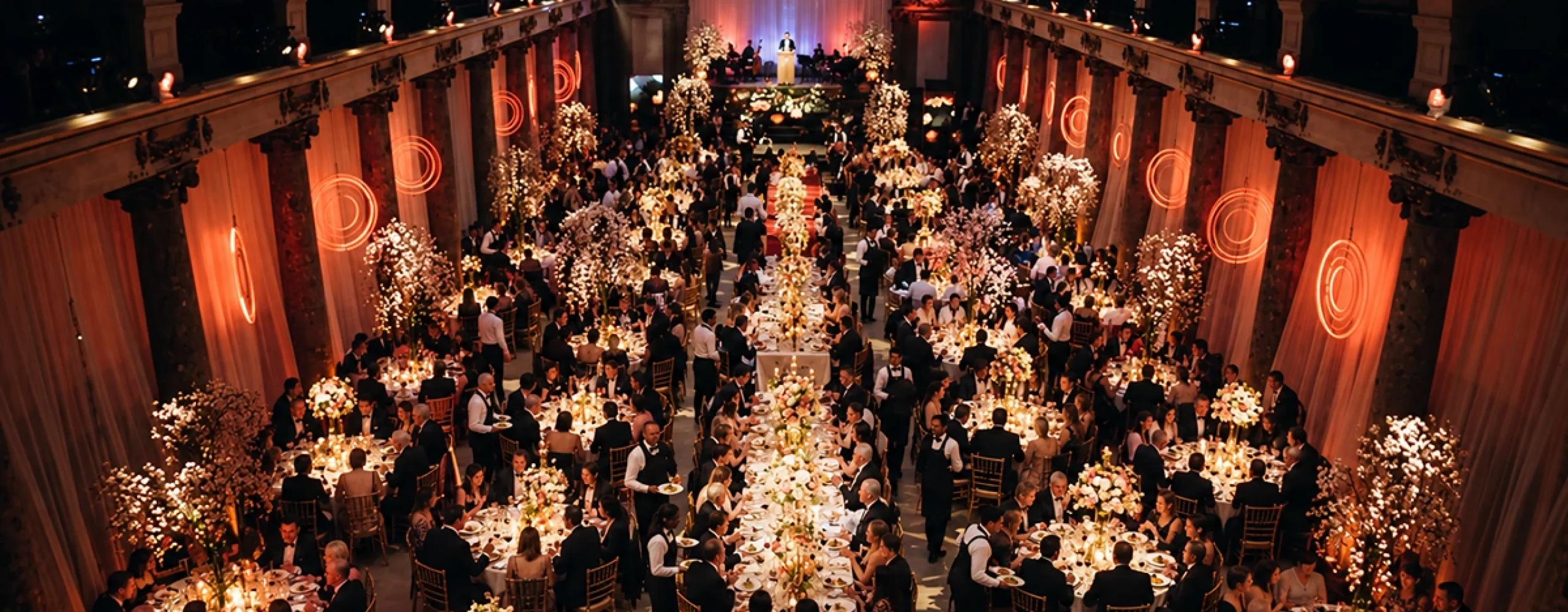
A gala event budget comes down to four buckets: venue, food and drink, production and people. For a charity gala, the common benchmark is spending about 50 cents for every dollar raised. Here’s that rule worked through for a 300-guest charity gala, one step at a time.
Step 1. Set your spending cap from the fundraising goal
Start with what you want to raise, then cut it in half. A $200,000 goal gives you a $100,000 ceiling for everything, from the ballroom deposit to the last printed program.
After step 1, your budget left is $100,000.
Step 2. Price the floor team by guest count
PremierStaff lists hospitality and catering staff from $49 an hour with a $5,000 contract minimum. On a 6-hour shift, here’s where the floor team lands at three common guest counts.
| Guests | Floor staff | Staffing cost | Per guest |
|---|---|---|---|
| 150 | 24 to 31 | $7,056 to $9,114 | $47 to $61 |
| 300 | 45 to 52 | $13,230 to $15,288 | $44 to $51 |
| 600 | 81 to 98 | $23,814 to $28,812 | $40 to $48 |
Headcounts cover servers, captains, check-in, greeters, seating and coat check. Bar coverage, overtime and setup hours sit on top, and premium markets can price higher.
After step 2, your budget left is $84,712 to $86,770 for a 300-guest night.
Step 3. Split what’s left between venue, dinner and production
The rest covers the room, the caterer’s per-guest dinner price and production like lighting, sound and valet. Ask for the dinner quote with service charge and tax included, and look for sponsors to underwrite production.
Hold that line and your cost per dollar raised stays right at 50 cents.
The Staff You Need for a Gala Event
Here’s what happens at a gala from the staffing side. Guests arrive in one wave, move to their tables in about ten minutes, eat between speeches and then leave at nearly the same time. Each of those moments needs its own people, so plan the team by phase. A typical timeline shows what happens at a gala hour by hour:
- Reception and check-in run for about an hour as guests arrive and mingle.
- The move to dinner takes 8 to 10 minutes while guests find assigned tables.
- Dinner and the program share about 90 minutes, with courses timed around the speakers.
- Dessert, dancing and departures fill the last hour or so.
Who runs the dinner at a gala?
Servers carry each course out in one wave and clear before the next speaker steps up, while captains watch their section and call the timing. The pressure peaks in every course window, which can be as short as the gap between two speeches.
Plan for one server per 10 guests and one captain per eight floor staff. Our corporate gala staffing guide breaks it down by guest count.
Who runs the arrival and seating?
Check-in staff confirm names and hand out table cards, and greeters walk guests toward the reception and later to their tables. Their busiest stretch is the first wave, when most guests reach the door in the same short window.
Plan the desk around that peak wave. This check-in staff guide shows what a strong arrival team handles.
Who covers coat check and the program?
Coat check tags and returns belongings, and program staff hand out bid paddles and help the auctioneer spot raised hands. Each live auction lot is busy, and so are the final 15 to 30 minutes when everyone wants their coat back.
Plan these roles before doors open. See what a coat check attendant does and how to run a smooth charity auction.
Subscribe To Our NewsLetter
We help you to elevate your events with our highly skilled professionals. You got these three simple steps to book our service

FAQs
What should you wear to a gala event?
Most invitations say black tie or black tie optional. Hosts usually brief their service team on the dress code too, which our New York event staff plan for.
How long does a gala event usually last?
Plan for about five hours, from a one-hour reception through dinner, the program and departures. When you book Chicago event staff, add setup time on top of that.
How far ahead should you plan a gala event?
Book the venue first, often many months out, then confirm your floor team four to six weeks before the date with our Los Angeles event staff.
What's the difference between a gala event and a banquet?
A banquet is mainly a shared meal, while a gala event adds formal dress, a program and often fundraising. Both need trained catering staff to keep plated courses on time.
Can a small nonprofit host a gala event?
Yes, if you keep costs near 50 cents per dollar raised and lean on sponsors. A smaller guest list still needs a staffed desk, so consider our check-in staff.
Plan Your Gala Event Around the Moments Guests Remember
So what is a gala at its core? A gala event comes down to a handful of moments: the arrival, the move to dinner, the program and the goodbye. Pick your format, set the budget against what you plan to raise, then staff each phase so nothing stalls. When you’re ready, find PremierStaff in your city and get a quote built around your run of show.
Are You Ready to Elevate Your Event?
Don’t wait—book Premier Staff now to secure top-tier professionals for your next event.
Recommended Posts