
- How to Plan Corporate Retreat Staffing Without Visible Service Gaps
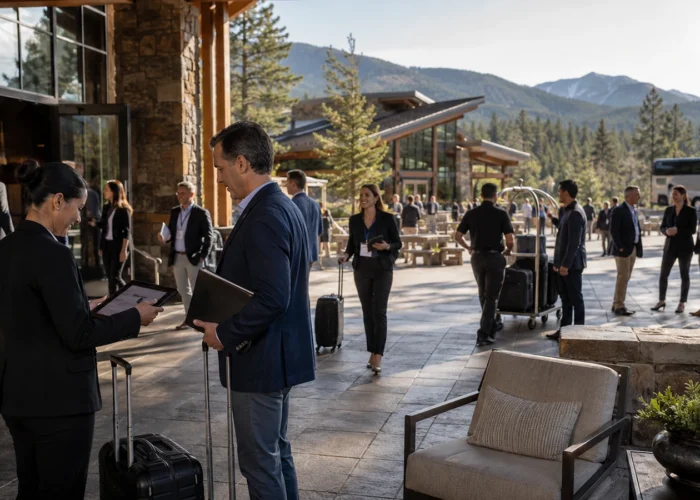
How to Plan Corporate Retreat Staffing Without Visible Service Gaps
Corporate retreat planning gets messy when the staffing plan is treated like a normal event checklist. A retreat is smaller, more visible, and more personal. If check-in slows down, meals feel uncoordinated, or executives have to ask where to go next, everyone notices.
Executive Summary
This guide shows how to plan corporate retreat staffing around the moments guests actually notice: arrivals, meals, room resets, session transitions, executive support, and off-site movement. You’ll learn why retreats need a different staffing model than conferences, how many staff to plan for, when to brief them, and what details to lock before booking. This is better because it tells the reader exactly what the blog covers without promising a full ROI section that no longer exists.
The biggest mistake companies make is staffing a retreat like a smaller conference. At a retreat, every delay, service gap, and awkward transition is visible to the whole group. Good retreat staffing is not about having people standing by. It is about having the right team anticipate the moments guests should never have to ask about.
— Daniel Meursing, CEO of Premier Staff
Before you decide how many people to hire, you need to decide what kind of event you are actually planning.
A corporate retreat is not a smaller conference. At a conference, people are scattered across sessions, booths, hallways, and side meetings. A slow check-in line or unclear room direction can get absorbed into the noise. At a retreat, the group is usually together. That means the same 40, 80, or 150 people see the same delay at the same time. And that does change the staffing plan.
For example, imagine a 60-person leadership retreat at a resort. Breakfast runs five minutes late. The room reset is still happening while executives walk in. The facilitator is ready, but half the group is waiting for coffee. Nobody would call that a disaster, but the room feels underprepared before the first session even starts.
That is why your first planning decision should be:
What moments will the full group experience together? Those are the moments that need the most staffing attention.
For most retreats, that means planning coverage around:
- arrival and check-in
- breakfast and coffee service
- session transitions
- meal timing
- breakout room resets
- outdoor or off-site movement
- executive requests
- end-of-day wrap-up
This is where retreat planning differs from broader corporate event planning. A normal corporate event may focus on flow, attendance, and session logistics. A retreat has to protect the mood of the room because the experience is part of the purpose.
That purpose matters. Harvard Business Review has discussed how offsites can support collaboration and stronger working relationships when they are designed with intention. The staffing should support that same goal, not distract from it. HBR
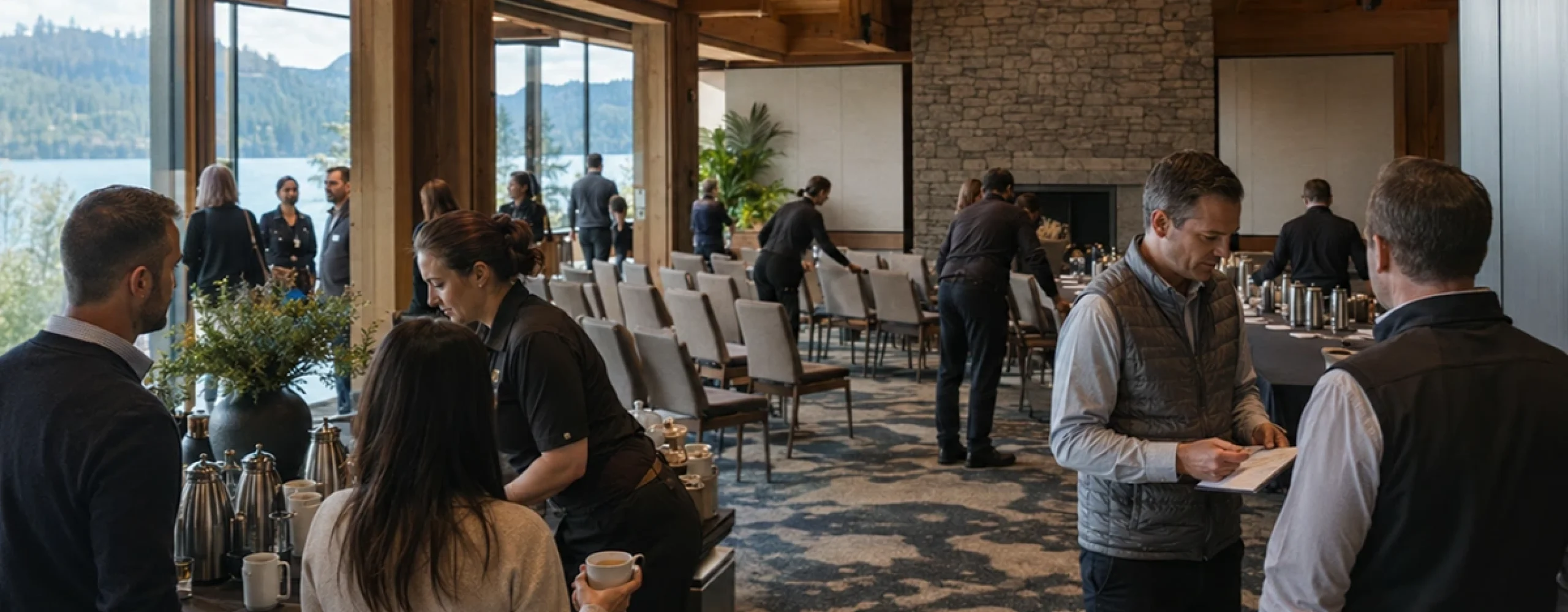
Retreat Staff Should Catch the Coffee Line Before It Becomes a Conversation
Once you know which retreat moments everyone will see, the next decision is what the staff should actually do in those moments.
For a corporate retreat, staff should not wait for guests to ask for help. They should notice small problems early: a coffee line forming before the strategy session, a guest looking for the breakout room, lunch service running behind, or outdoor seating needing shade before people arrive.
This is called anticipatory service. The Ritz-Carlton service model is a useful hospitality example because it emphasizes responding to both expressed and unexpressed guest needs. For retreats, that means staff should understand the agenda, the guest profile, the tone of the room, and the moments where friction would be most visible.
That is why hospitality staff matter in retreat planning. They are not only serving food or pointing people to rooms. They are protecting the pace of the retreat so the group can stay focused.
Before booking staff, decide which moments need proactive coverage:
- Who watches arrivals?
- Who manages meals and coffee?
- Who resets rooms between sessions?
- Who supports executives quietly?
- Who handles guest requests without interrupting the program?
Why Staffing Matters More at Retreats
Experience quality has a direct impact on engagement and outcomes. In retreat settings, even small service delays can disrupt the room’s energy because everyone experiences them at the same time.
This is especially critical for leadership retreats, where expectations are higher and the environment is more personal.
That is why corporate retreat staffing is not just about coverage; it is about protecting the flow of the experience so participants stay focused, not distracted.
Subscribe To Our NewsLetter
We help you to elevate your events with our highly skilled professionals. You got these three simple steps to book our service
Your Guest Count Is Not the Staffing Plan
Once you define the behavior you need, the next question is headcount. A corporate retreat usually needs tighter staffing than a conference because staff are not only answering requests. They are watching the room, supporting transitions, handling meals, resetting spaces, and keeping the program moving without making guests feel managed.
Use this as a planning starting point, not a fixed rule:
Retreat Size | Staffing Starting Point | Why |
20–30 guests | 3–5 staff | Check-in, hospitality, room reset, coordinator support |
50–75 guests | 6–10 staff | Meals, transitions, session flow, executive support |
100+ guests | 12–18+ staff | Multiple zones, breakout rooms, outdoor movement, vendor coordination |
For example, a 50-person leadership retreat at a resort may need one on-site coordinator, two hospitality staff for meals and breaks, two room-flow staff for transitions and resets, and one backup person for guest requests or executive support. If the retreat includes outdoor activities, transportation, or multiple breakout rooms, the number goes up.
This is where broader event staffing ratios help as a reference, but retreat staffing needs a tighter lens. The staff count should be based on visibility, movement, and guest expectations, not just total attendance.
How Many Staff Do You Need for a Corporate Retreat?
A corporate retreat usually needs tighter staffing than a conference because guests move and experience delays together.
A practical starting point:
- 20–30 guests → 3–5 staff
- 50–75 guests → 6–10 staff
- 100+ guests → 12–18+ staff
However, staffing should not be based on headcount alone. It should be based on visibility, movement, and guest expectations.
If your retreat includes outdoor activities, multiple breakout rooms, or executive-level attendees, you will need additional staff to maintain flow and prevent visible service gaps.

If Staff See the Agenda the Day Before, they can only react.
Now, the next planning decision is timing. For a normal corporate event, you might be able to brief staff closer to the date because the work is more reactive: check people in, direct traffic, support the room, answer questions. A retreat needs more prep because the staff has to understand the purpose of the offsite, the schedule, the guest profile, the venue flow, and the service tone.
A safer planning window is 4–6 weeks before the retreat, especially if the retreat includes executives, outdoor movement, multiple rooms, private meals, transportation, or custom activities.
That time is not just for booking people. It is for making sure the staff know what kind of experience they are supporting.
Use this timeline:
Timeline | What to Lock |
6 weeks out | Guest count, venue, retreat goal, rough agenda |
4–5 weeks out | Staffing count, roles, hospitality coverage, coordinator needs |
3 weeks out | Room flow, meal timing, executive requests, activity support |
1–2 weeks out | Final staff briefing, run-of-show, escalation contacts |
Week of retreat | Confirm arrival times, venue map, weather backup, and service notes |
This matters most for off-site retreats. If the group is moving between a resort lawn, meeting room, dinner space, and outdoor activity area, the staffing team needs to know the venue before the retreat starts. A general venue selection plan helps, but retreat staffing should go deeper into how people will move, pause, eat, and reset throughout the day.
Platforms like Offsite also show how modern retreat planning brings together venue, agenda, meals, logistics, and team experience. Staffing should be planned around that full picture, not added at the end like a vendor checkbox.
Breakfast at 8:30 Is Not a Retreat Checklist
Once staffing timing is locked, the next question is simple: what do you actually give the team before the retreat? A normal event checklist might cover arrival time, venue address, registration setup, vendor contacts, and meal schedule. That is useful, but it is not enough for a retreat.
A retreat checklist has to cover the details guests feel directly: who greets them, who resets the room, who handles private requests, who watches meal timing, and who makes sure executives are not standing around waiting for the next thing to begin.
For example, if your team is hosting a two-day offsite at a resort, staff should know more than “breakfast is at 8:30.” They should know when the leadership session starts, when coffee needs to be cleared quietly, which room has to be reset during the outdoor activity, and who handles a last-minute dietary issue without pulling the planner away from the group.
A broader corporate event checklist can help with the basics, but a retreat checklist needs a tighter guest-experience layer. The person acting as the on-site event coordinator should be able to see the whole retreat, not just one task list.
RETREAT STAFFING CHECKLIST
- Guest flow: arrivals, meals, breaks, sessions, departures
- Service tone: proactive, quiet, polished, not reactive
- Visibility: setup and fixes should stay out of guest view
- Executive handling: names, preferences, escalation paths
- Venue movement: indoor, outdoor, transport, weather backup
- Briefing: retreat goal, agenda, participant profile, room flow
A Checklist Takeaway
A retreat checklist should not only ask, “Is the event ready?” It should ask, “What could guests notice if this is not handled early?”
What Should You Lock Before Booking Retreat Staff?
Before you contact a staffing partner, make sure the retreat is clear enough to staff properly. You do not need every tiny detail finalized, but the staffing team should understand the shape of the retreat. Otherwise, they are guessing on headcount, service style, and coverage.
Lock these items first:
- retreat goal: alignment, team building, leadership planning, celebration, or training
- guest count and seniority level
- venue type: hotel, resort, outdoor venue, private estate, or off-site space
- agenda flow: arrivals, meals, sessions, breaks, activities, departures
- key shared moments where the whole group is together
- meal and beverage expectations
- indoor and outdoor movement
- executive preferences or VIP handling
- weather backup, transport, and room reset needs
- escalation contact for staff during the retreat
This is where many planners get stuck. They ask for “staff for a 75-person retreat,” but the better request is more specific: “We need retreat staff for arrival, breakfast, two session transitions, outdoor activity movement, lunch service, and evening reception support.”
That kind of detail helps the staffing partner recommend the right mix of coordinator support, hospitality staff, logistics help, and activity support. It also keeps the retreat from feeling patched together once guests arrive.
FAQs
How far in advance should you book a corporate retreat?
For most corporate retreats, book staff at least 4–6 weeks in advance. Retreat teams need time to understand the agenda, venue flow, guest profile, service tone, and executive expectations. A broader corporate event checklist can help with basics, but retreats need an earlier briefing.
How many staff do you need for a corporate retreat?
It depends on guest count, venue complexity, and retreat format. As a starting point, 20–30 guests may need 3–5 staff, 50–75 guests may need 6–10 staff, and 100+ guests may need 12–18+ staff. Broader event staffing ratios help, but retreats usually need tighter coverage.
What is different about corporate retreat staffing vs. conference staffing?
Conference staffing is often reactive. Staff answer questions, manage check-in, and support sessions. Corporate retreat staffing is more anticipatory because the group is smaller, more visible, and more senior. That is why retreat planning should go deeper than standard corporate event planning.
What should be included in a corporate retreat checklist?
A corporate retreat checklist should include arrival flow, meal timing, break coverage, room resets, executive handling, guest preferences, outdoor movement, weather backup, transport, and escalation contacts. A standard event coordinator checklist is useful, but retreats require more detail on guest experience.
Key Takeaway
Do not book retreat staff from head count alone. Book them around the moments guests will feel most clearly: arrival, meals, transitions, executive movement, and anything that could become visible friction.
For planning, a broader luxury event planning checklist can help with service expectations, but a retreat staffing plan should go further. It should explain what staff needs to protect, not just what they need to set up. PremierStaff places briefed, community-ready brand ambassadors for brands that want local loyalty, not just temporary attention.
Are You Ready to Elevate Your Event?
Don’t wait—book Premier Staff now to secure top-tier professionals for your next event.
Recommended Posts



An event brand ambassador is the person who represents your brand to guests from setup to wrap-up. Before your event,...