A BEO is the sheet your venue hands to the kitchen, the setup crew, and the floor staff so everyone works from the same plan. The letters stand for Banquet Event Order. If you’re hosting a gala or a wedding, someone at the venue writes one for you and asks you to sign it. It’s easy to skim, which is how a wrong guest count or a missing contact name slips through.
Here’s who writes it and what’s worth reading twice before you sign.
Quick Summary for the Banquet Event Order
- A BEO is the venue’s written plan for your event, and the venue’s catering or sales manager writes it.
- You sign it, so read the guest count, the timeline and the name of whoever runs the floor before you do.
- Every department works from the signed version, so a late change needs a fresh copy sent to all of them.
"I always ask hosts one question about their banquet event order. Who is standing on the floor when the first guests walk in? The best orders answer that in plain words, with a name, a role and an arrival time."
— Daniel Meursing, CEO of Premier Staff
What's on a BEO?
Tap each part to see how it looks on a real order.
On a sample BEO
Check before you sign
The venue lead has a name and a phone number, not just a department.
On a sample BEO
Check before you sign
Every vendor has an arrival time and a door to use.
On a sample BEO
Check before you sign
Dietary notes point to a table or a name, not just a count.
On a sample BEO
Check before you sign
A floor plan is attached, not only described in words.
On a sample BEO
Check before you sign
Each role has a count and a shift time that covers the whole night.
On a sample BEO
Check before you sign
You know the balance due date and what the service charge covers.
Want a trained team named on your order?
Find your cityHow a Banquet Event Order Works
A BEO, short for banquet event order, is the working document a venue builds for one event. It lists the menu, room setup, timeline, staffing and pricing you agreed to. The venue’s catering or sales manager writes it, and you or your planner review and sign it before the team follows it.
A banquet event order lists every detail of one event
The order holds what you and the venue agreed on, and Hotel Tech Report describes it as the source of truth for kitchen crews, front desk agents and security.
- Event name, date, room, start and end times, guest count and a venue contact sit at the top.
- Food, drink and service style follow, listed dish by dish with the method of service.
- Pricing and billing terms close the order so both sides see the same totals and deposits.
The venue’s catering or sales manager writes it
The manager who sold your event drafts the order once you accept a quote. Some venues call it a catering event order. One person keeps every detail in one place.
- Software templates fill in the fixed details, so managers only type what changes for your event.
- Stored menus, prices and room layouts keep quotes consistent from one event to the next.
- At large hotels a convention service manager often handles special requests, as the BLS notes.
You or your planner review and sign the order
You read every line, fix anything that looks off and then sign. Your signature approves the plan, so it’s the easiest moment to catch a problem before the team follows it.
- Check that guaranteed and expected guest counts are labeled separately and match your final headcount.
- Read the dietary notes and allergen flags line by line with your caterer.
- Ask who at the venue approves changes after you sign and how fast they confirm them.
Each function space gets its own order
One order covers one event in one room, so a single weekend can need several. A rehearsal dinner, ceremony, reception and brunch each get a separate order. Ask to see all of them.
- A gala with a cocktail hour and a seated dinner may split into separate orders by room.
- Catering teams bundle all the orders into one packet for each date of your event.
- Matching guest counts across every order avoids confusion at the door and at the tables.
Every department works from the final version
After you approve it, the venue sends the order to kitchen, setup, service, AV and security teams, and each group pulls its own tasks from the same page.
- Parking and valet teams plan around the expected number of cars you list.
- Outside vendors such as florists and bands appear with their contact details and load-in times.
- A revised copy goes out whenever details change, so nobody works from an old page.
Staffing roles belong on the order too
A strong order names how many servers, hosts and attendants the event needs and what each does. At a luxury evening, those roles shape how guests feel from arrival to farewell.
- Ask for shift times and break plans so the room stays covered all night.
- Ask how the venue covers a no-show or a late finish without leaving a gap on the floor.
- Ask whether the order lists food runners, who keep hot plates moving from kitchen to table.
Quick tip: Venues usually finalize the order a few days before the event, so send late changes like a new dietary need or a VIP arrival the moment you know them. A request sent the night before has little time to reach every department.
What to Check on Your Banquet Event Order Before You Sign
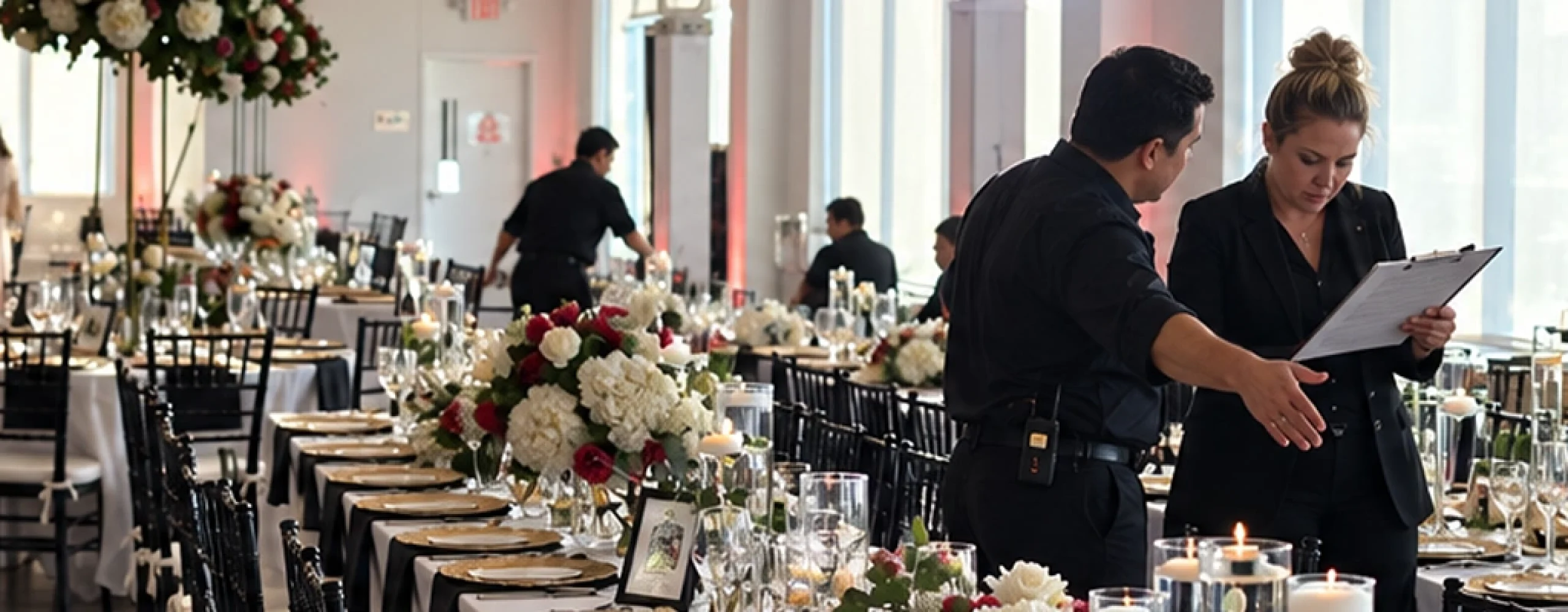
Check three things before you sign a banquet event order: the numbers, the timeline and the people. A clear order protects the guest experience, and a vague one tends to show its gaps in the middle of service. Read every line before you approve it, and use the table for the lines people tend to skip.
Line to read | Question to ask the venue |
Billing | Which charges are listed and when is each payment due? |
Vendor contacts | Who arrives from outside vendors and when do they load in? |
Parking and access | Where do guests, staff and deliveries enter? |
VIP requests | Who greets VIP guests and where do they go? |
Quick tip: Ask the venue to send each draft as a shared document with tracked changes. You can see exactly what moved between the first version and the final one, which is hard to spot in a fresh PDF.
Confirm the guest count and the timeline
Look for guaranteed, expected and maximum guest numbers labeled separately, as iVvy recommends. Then read the timeline for load-in, setup, service windows and reset, and pair it with an event call sheet so every team arrives on time.
Match the staffing plan to the service style
Plated dinners, stations and passed bites need different team sizes, so compare the server count with our guide to table service styles. For seated dinners, our banquet servers guide helps you sanity check numbers against your guest count.
Ask who leads the team on site
Every order should name who owns the room on the day, plus an after-hours contact for surprises. Our guide on whether you need an event manager shows why that owner matters when plans shift on the night.
How a Banquet Event Order Differs by Event Type
The format of a banquet event order stays familiar across very different evenings, and the venue may not be a hotel at all, since Cvent found 48% of planners now source non-hotel spaces. Galas lean on timing, weddings lean on handoffs and launches lean on arrivals.
Read the timeline closely for a gala
Picture a 300-guest gala in Chicago with a cocktail hour, a seated dinner and a live auction. Each service window needs a start and end time, and our corporate gala staffing guide covers the roles behind them.
Match every order for a wedding weekend
A weekend wedding in Los Angeles can need separate orders for the rehearsal dinner, ceremony and reception. Match guest counts, dietary notes and contacts across all of them, and see our wedding staff page for the team.
Look for arrival plans at a product launch
A product launch in New York depends on how smoothly guests get through the door. Look for VIP handling, access limits and delivery notes, and read our VIP concierge guide for what that team handles.
Quick tip: For a launch in a New York City building, ask the venue to write the freight elevator and loading dock window on the order. Shared service entrances can slow vendors down on event day.
Subscribe To Our NewsLetter
We help you to elevate your events with our highly skilled professionals. You got these three simple steps to book our service
FAQs
What is a banquet event order and how does it differ from a run of show?
A banquet event order covers the venue’s food, setup and pricing, while a run of show is the host’s minute-by-minute program. Our New York City team works from both.
Is a banquet event order the same as a contract?
A contract sets payment terms and cancellation rules. A banquet event order lists the day-of details like menu, timing and room setup. Our Atlanta team staffs to the order.
What does a banquet event order mean for a small private dinner?
A short banquet event order still covers menu, timing and service roles. It gives the venue and your host one shared plan. See our private events team.
Can I use a banquet event order template to start planning?
Yes, several venue software providers share free BEO templates in Word, Excel and Google Docs. Use one to list your questions. Our Chicago team can help.
How far ahead does a banquet event order get finalized?
Venues usually finalize a banquet event order a few days before the event. Ask for the deadline in writing. Our Dallas team plans around it.
Get Your Banquet Event Order Right Before the Doors Open
A banquet event order shapes how your evening feels long before the first guest walks in. The venue’s catering or sales manager writes it, you review and sign it, and every team follows it on the night. Ask for clear staffing roles, a named lead and a clean revision whenever plans change. Then the order does its job quietly while your guests enjoy the room. If you want a trained team named on your order from the start, find your city on our locations page.
Are You Ready to Elevate Your Event?
Don’t wait—book Premier Staff now to secure top-tier professionals for your next event.
Recommended Posts