
- What Goes On an Event Call Sheet So Every Team Arrives on Time

An event call sheet is a one-page brief that lists the venue, call times by role, the staff entrance, parking, dress code, key moments and on-site contacts. Your staff and team leads get the full version, while vendors, the venue manager and your host get a trimmed one. With 54% of meeting pros expecting more product launches in 2026, according to the Amex GBT forecast, more teams will need those answers on one page.
Quick Summary for Your Event Call Sheet
- What to look for: Event day call times by role, the staff entrance and parking, and one named lead for each team with a number that’ll actually get answered.
- What to avoid: Sending one master call sheet to everyone, so your host wades through load-in notes and your servers see private client numbers.
- What matters most: Every person on site knows when to arrive, where to go and who to ask before your first guest walks through the door.
A call sheet is the first real look our team gets at a client's event, and it sets the tone for the whole night. When every person knows their time, their door and their lead, they can put all their attention on the guests.
— Daniel Meursing, CEO of Premier Staff
A call sheet is the one-page brief that tells every person working your event when to show up, where to go, and who to report to. It pulls the staff-facing details out of your run of show and puts them in a format people can read on a phone while they’re still in the parking lot. Here are the nine things yours should cover.
1. Event name date and venue details
Start with the basics, even when they feel obvious. Your servers might work three events in the same week, so the event name, date and full venue address keep everyone heading to the right place.
- Add the room or floor name, since hotels often host several events on the same night.
- Include a map pin link that opens straight into a phone’s navigation app.
- Spell out the host’s name the way staff should say it when they greet guests at the door.
2. Call times for every role
Event day call times should be split by role and padded for traffic. Chicago drivers lost 112 hours to congestion in 2025, according to INRIX, so a downtown gala there needs a bigger buffer.
- Give separate times for load-in, the staff briefing, doors open and load-out.
- Pad call times in New York and Boston too, where drivers lost 102 and 83 hours to traffic.
- Size each team before you set times, using a guide like servers per guest.
3. Parking load-in and the staff entrance
Nothing looks worse at a gala than a server in black tie walking through the front lobby with a garment bag. Tell your staff exactly where to park and which door they should use.
- Name the exact entrance, since San Francisco City Hall only lets vendors load at Grove or McAllister Street during set windows.
- Say whether parking is validated, paid or street only, and list the closest garage.
- Add the security step if the venue checks ID against a staff list at the door.
4. On-site contacts and team leads
Your call sheet should name one lead for each team and give a phone number that’ll be answered on the night. Staff shouldn’t have to guess who handles a problem when it comes up.
- List the on-site event manager first, then the captains for service, check-in and setup.
- Add the venue contact, plus radio channels and the staff Wi-Fi if your team uses them.
- Leave the client’s cell number off unless a lead truly needs to reach them.
5. Dress code and presentation standards
At a luxury event, the way your team looks is part of the guest experience. Spell out the dress code clearly so nobody arrives in the wrong shoes or a shirt that needs pressing.
- Name the exact attire, such as a black suit, white shirt and black tie.
- Note grooming details like hair tied back, minimal jewelry and phones kept out of sight.
- Say whether uniforms are handed out on site or staff should arrive already dressed.
6. Key moments from the run of show
Your staff need the moments from the run of show that change their job, like when dinner is served or speeches begin. Pull those cues onto the call sheet so the whole room moves together.
- Mark doors open, seated dinner, speeches and dessert so each team knows its busiest window.
- Note the quiet moments, like a toast, when tray passing and clearing should pause.
- Flag when your food runners need to be in position for each course.
7. Staff meals and break times
A long shift with no food plan leaves your team running on empty by dessert. Tell everyone when and where they’ll eat, and plan breaks so the floor never looks short while guests are watching.
- Name the staff meal time and the room where it’s served.
- Stagger breaks by team so every section stays covered.
- Note any dietary options the caterer is providing for staff.
8. Emergency and safety details
Most nights go smoothly, and your staff should still know exactly what to do if something goes wrong. A short safety block on the call sheet saves precious minutes when they matter most.
- List the nearest 24-hour emergency room and its address.
- Name who’s handling first aid and where the kit is kept.
- Add the meeting point and the event security lead to call first.
9. Weather plan for outdoor events
If any part of your event happens outside, like a terrace cocktail hour or a valet line, the weather belongs on the call sheet. Check the National Weather Service forecast before you send it.
- Add the expected temperature and chance of rain for event hours.
- Note the sunset time if lighting or photos depend on it.
- Spell out the backup plan and who makes the call to move indoors.
PremierStaff planning tool
Call Sheet Readiness Check
Tick what your call sheet already has and see what's missing.
Not ready to send
0 of 10 items on your sheet
STAFF CALL SHEET
Gala
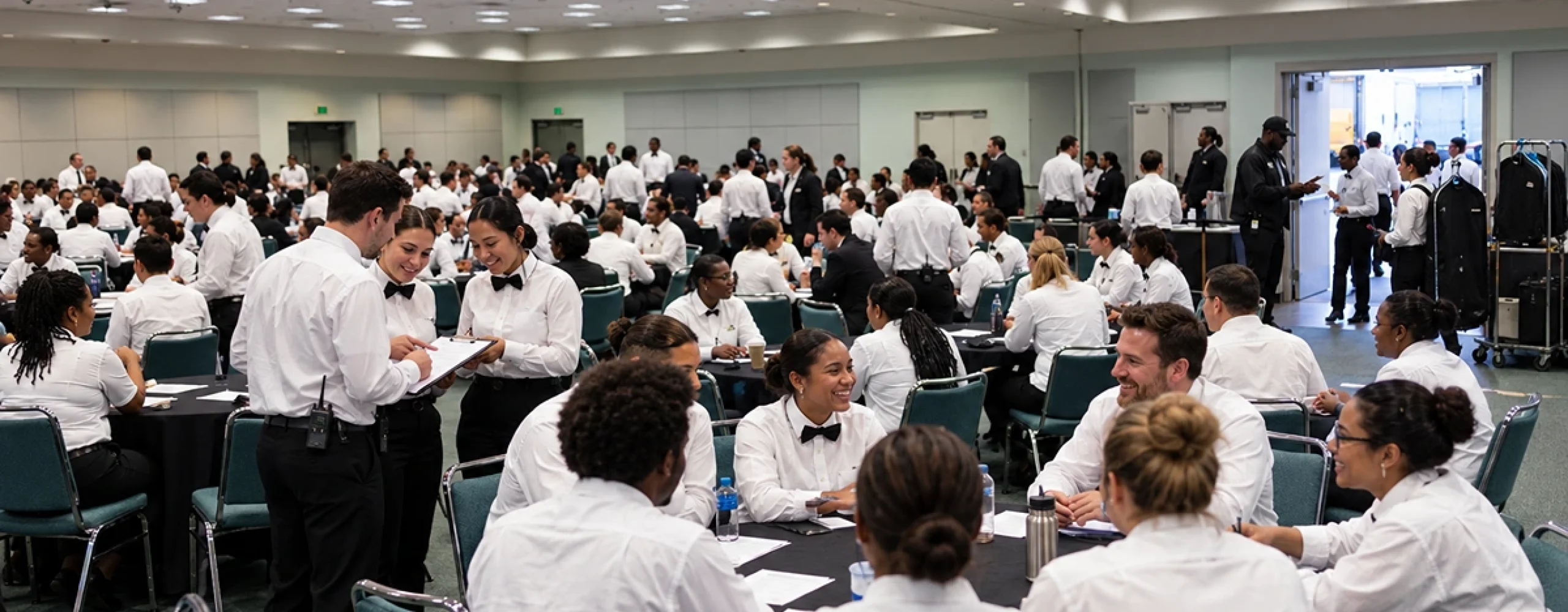
Who Receives the Event Call Sheet
Everyone working your event should get a call sheet, and each group should get the version that fits its job. That keeps the details easy to scan and keeps private phone numbers private.
Who gets it | What their version includes |
|---|---|
Staff and team leads | Call times, entrance, dress code, lead contacts and service cues |
Venue manager and vendors | Load-in windows, dock access, and power and room contacts |
Host or client contact | Arrival times, guest-facing moments and one lead to call |
Your staff and team leads get the full version
Servers, check-in staff and captains get every detail they need for the shift. Send team leads their copy first so they can catch mistakes before the rest of the crew sees it.
Venue managers and vendors get the logistics version
Your caterer, florist, AV team and venue manager care most about load-in windows and access. San Francisco City Hall, for example, has events end by 2 a.m. with load-out right after.
The host gets a short summary
Your host doesn’t need parking notes for thirty staff members. Send a shorter version with arrival times, key guest moments, one lead to call and their VIP concierge contact if you’ve booked one.
When to Send Your Call Sheet and How to Update It
Send the call sheet early enough for staff to plan travel and ask questions, then resend it every time something changes. An outdated sheet on the event day causes more confusion than having no sheet at all.
1. Send the first version a few days out
Your venue’s rules often set the deadline. Boston Public Library asks for delivery times in writing two weeks ahead, so draft the call sheet early and send staff the final a few days out.
2. Resend it after every change
If the guest count, timing or entrance changes, resend the full sheet with the new event day call times clearly marked. Small updates sent in group texts get lost, and someone always misses one.
3. Confirm every team lead has it
Ask each team lead to reply once they’ve read it and shared it with their crew. On a gala staffing job, that one check saves a lot of last-minute calls.
Get those three habits right, and your call sheet stays accurate from the first draft to the moment your first guest walks in.
Subscribe To Our NewsLetter
We help you to elevate your events with our highly skilled professionals. You got these three simple steps to book our service
FAQs
Is a call sheet for a product launch different from a gala call sheet?
The layout stays the same, but a launch call sheet adds demo timing, press arrivals and product handling notes. Hosting in Los Angeles? Share those cues with staff early.
Who writes the call sheet for an event?
Your planner or event manager usually writes the call sheet, and your staffing partner adds roles and call times. If you’re booking catering staff, share your roster early.
Should a call sheet include every staff member's phone number?
Only team lead numbers belong on a call sheet, which protects everyone’s privacy. For bigger events in Chicago, add one dispatch number the whole crew can call.
What's the best format for an event call sheet?
A one-page PDF or a mobile-friendly link works best, since staff check the call sheet on their phones. If you’re hosting in Miami, a link is easier to refresh.
Can you use a film call sheet template for an event?
You can, but swap the scene and crew fields for service cues, dress code and entrance details. An event call sheet template for New York needs those guest-facing details.
Send a Clear Call Sheet Before Your First Guest Arrives
A good call sheet gives every person on site the same three answers: when to arrive, where to go and who to ask. Build it from your run of show, send each group the version that fits its job and resend it whenever plans shift. When you’d like a team that shows up briefed and polished, take a look at our hospitality staffing services.
Are You Ready to Elevate Your Event?
Don’t wait—book Premier Staff now to secure top-tier professionals for your next event.
Recommended Posts


An event brand ambassador is the person who represents your brand to guests from setup to wrap-up. Before your event,...